MilleMiglia and generative UI set new benchmarks in logistics and education
Google Research releases MilleMiglia for middle-mile logistics benchmarking and a library of AI-generated learning interactives for educators, while.

Published
September 18, 2026
Reading time
4 minutes
Perspective
Research
Topics
logistics optimization · generative UI · legal AI
On September 17–18, 2026, multiple institutions released foundational tools and warnings shaping applied AI and operational research. Google Research unveiled MilleMiglia, a C++ instance generator for middle-mile logistics networks, addressing a long-standing data scarcity issue in operational research. Simultaneously, Google introduced a public library of AI-generated learning interactives for STEM education, leveraging generative UI with pedagogical guardrails. OpenAI launched Astra for Law and confirmed Cooley’s use of ChatGPT Work to streamline IPO workflows. Meanwhile, Simon Willison reported targeted social engineering attacks against Rust crate maintainers and cited Thomas Ptacek’s strict policy against using LLM-suggested phrasing in writing.
MilleMiglia enables realistic middle-mile logistics benchmarking
MilleMiglia is a C++ instance generator developed by Google Research to create privacy-preserving, realistic benchmarks for middle-mile logistics networks. It models multi-commodity flow on space-time graphs, capturing fixed vehicle schedules, distribution center throughput limits, and multi-hop shipment transfers across regional hubs. Unlike traditional VRP models, it accounts for synchronization delays when shipments miss scheduled connections. The tool is open-source and designed to standardize research in a domain previously hindered by proprietary data restrictions.
Source: MilleMiglia: A realistic instance generator for middle-mile logistics · Google Research Blog
Google releases AI-generated learning interactives for STEM education
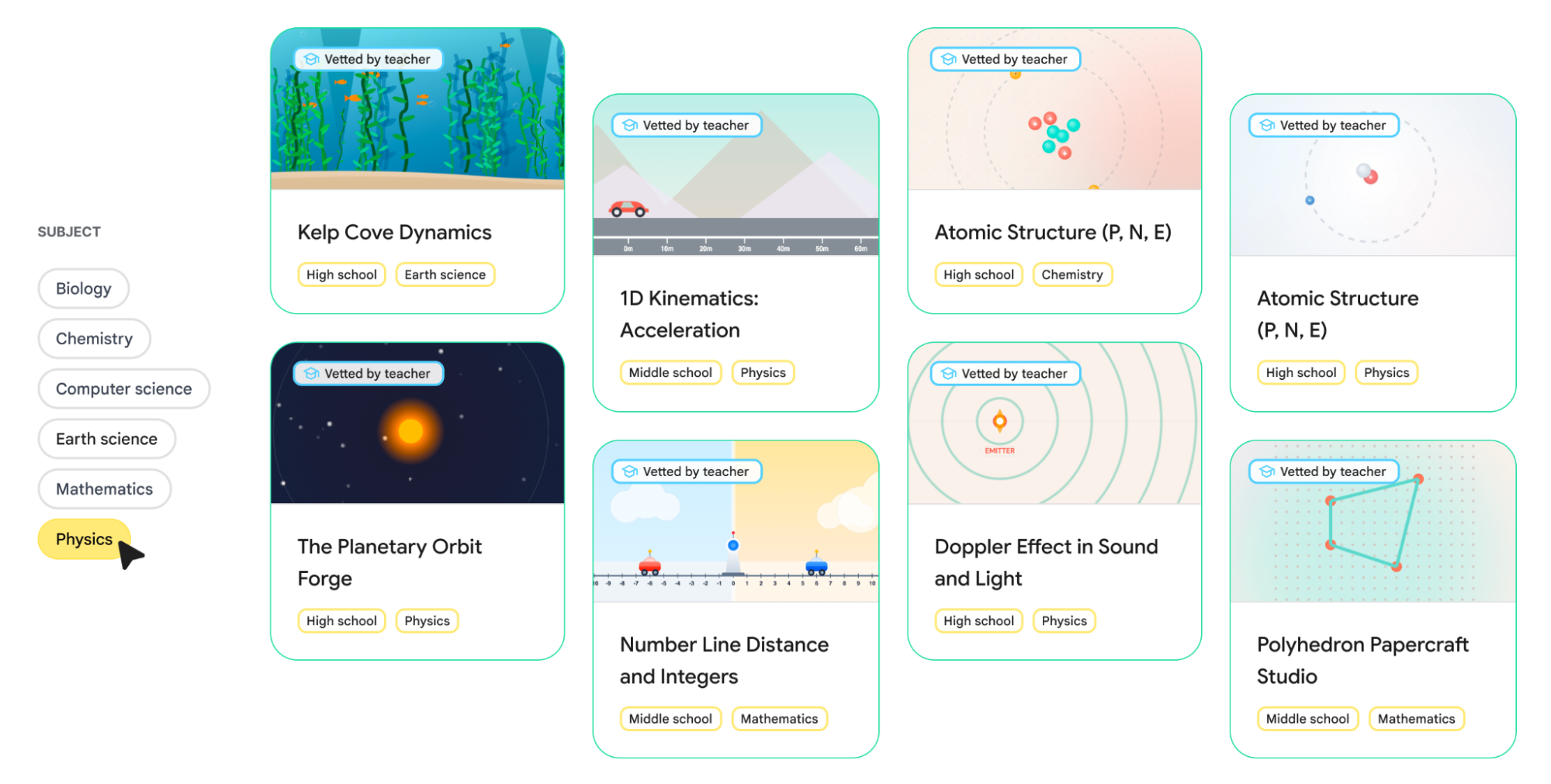
Google Research released a public library of over 30 AI-generated learning interactives for middle and high school STEM subjects, developed using generative UI with pedagogical guardrails. Each interactive is built around teacher-approved learning objectives, structured into progressive game levels, and includes scaffolded hints, feedback, and worked solutions. The system was tested with educators and aligns with the ICAP framework for active learning. These interactives are accessible via Google Workspace for Education and are part of a pilot program for feedback collection.
Source: The future of practice: Enabling teachers to create learning interactives with generative UI · Google Research Blog
OpenAI introduces Astra for legal workflows

OpenAI announced Astra for Law, a product offering frontier intelligence tailored to legal firms, with connected data sources and legal-grade controls for confidential client work. The announcement confirms the integration of AI into legal practice but provides no technical details on architecture, training data, or compliance mechanisms. It is positioned as a direct tool for firm-specific workflows, distinct from general-purpose models.
Source: Introducing Astra for Law · OpenAI News
Cooley uses ChatGPT Work to accelerate IPO documentation

Law firm Cooley developed GO Public using ChatGPT Work to surface issues earlier in the IPO process, enabling lawyers to focus judgment on high-stakes decisions. The tool is integrated into their workflow to assist with document review and compliance checks. No technical specifications, training data, or performance metrics are disclosed. The deployment is presented as a firm-specific implementation without broader claims of industry-wide applicability.
Source: How Cooley is accelerating IPO work with ChatGPT · OpenAI News
Targeted social engineering attacks compromise Rust crate maintainers

Adam Harvey and the crates security team reported an ongoing campaign targeting prominent Rust developers through fake video calls, tricking them into installing malware or executing malicious commands. This led to a supply chain attack on the array ref crate last month. The attacks exploit trust in professional outreach, compromising publishing rights to open-source packages. The primary defense recommended is dependency cooldowns—delaying updates to new package releases to allow community detection.
Source: Be alert: targeted attacks on prominent Rustaceans · Simon Willison
Thomas Ptacek advises against using LLM-suggested phrasing in writing

Thomas Ptacek advocates a strict rule: never use a single word or phrase suggested by an LLM in authored text. He treats LLM output as a fact-checking and grammar tool only, rejecting its use for stylistic or structural composition. He describes LLM-generated phrasing as having a detectable 'weird smell' and argues this discipline preserves authorial integrity. He shared a custom proofreading prompt and tool screenshot to support his method, emphasizing intellectual personal protective equipment over automation.
Source: How To Write With An LLM · Simon Willison
What to watch next
These developments reflect parallel advances in applied AI: Google is expanding research infrastructure in logistics and education through open tools, OpenAI is deploying specialized AI products in legal domains, and independent analysts are raising critical warnings about social engineering and authorship boundaries. Each initiative operates within defined boundaries—no claims of generalization, scalability, or commercial readiness are made beyond the stated scope.
Continue reading