Ecommerce.com Launches AI Readiness Audit for Agentic Commerce
Ecommerce.com, after two years of stealth development, debuts as a diagnostic platform assessing online stores' readiness for AI-driven commerce.

Published
September 11, 2026
Reading time
5 minutes
Perspective
Research
Topics
agentic commerce · deterministic AI orchestration · medical AI device
Ecommerce.com, a domain long associated with retail but inactive for two years, has emerged as a diagnostic tool powered by Zen Media and Optimum7 Technologies under CEO Duran Inci. The platform evaluates any business domain for its compatibility with AI agents that now mediate purchase decisions by analyzing structured product data, entity consistency, and inventory accuracy. Unlike traditional marketplaces, it does not sell products but identifies whether a store can be seen and selected by AI assistants that compress shopping options into shortlists. The audit returns a scored report on generative engine optimization and conversion readiness, with free tools including AI price-testing and buyer persona simulation. Access is granted to brands spending $5,000 monthly across existing marketing functions, consolidating vendor spend into one stack.
Ecommerce.com evaluates store readiness for AI agent discovery
Ecommerce.com returns a scored assessment of a business’s compatibility with AI agents by analyzing machine-readable product data, price accuracy, inventory structure, and brand entity coherence across the web. The platform does not rank search results but determines whether a store appears in AI-generated shortlists, which now drive a growing share of purchases. This shifts competitive advantage from SEO to structural data integrity, a metric previously invisible to non-technical business owners. The audit’s output includes a technology stack identification and a roadmap for generative engine optimization, directly addressing the gap between traditional e-commerce practices and the requirements of agentic commerce.
Source: The Most Obvious Domain on the Internet Went Quiet for Two Years. Here Is What It Became. · HackerNoon · AI
AI engineering shifts from prompt-and-hope to deterministic orchestration

Modern AI systems are moving away from unstructured LLM prompts toward deterministic agent orchestration using compute budgeting, GraphRAG, and event-driven state machines. Instead of relying on large context windows, systems now use semantic graphs to structure memory, reducing noise and improving precision. Agents communicate via validated events in a central registry, not free-text chat, ensuring transactional integrity through rollback-capable workflows. This architectural shift replaces probabilistic outputs with verifiable, testable pipelines, enabling enterprise-scale deployment where reliability and auditability are non-negotiable.
Source: The End of Prompt-and-Hope AI Development · HackerNoon · ML
AI-GUIDE medical device transitions to commercial use via startup partnership

AI-GUIDE combines custom AI software with commercial ultrasound hardware to enable medics to insert guidewires in pre-hospital settings with minimal training. The device was developed under U.S. Army funding and validated through clinical testing at MGH. Its transition to AutonomUS Medical Technologies, supported by MIT’s licensing office and federal grants, demonstrates a structured pathway from defense research to field deployment. The project’s success hinges on alignment between operational military needs, clinical expertise, and engineering capability, with additional capabilities like peripheral nerve block technology under development.
Source: Lifesaving Lincoln Laboratory device wins 2026 Excellence in Technology Transfer Award · MIT News · AI
Audio8-TTS-Preview-0.6b enables multilingual TTS with zero-shot cloning

Audio8-TTS-Preview-0.6b is a 0.6-billion-parameter model supporting 11 languages and zero-shot voice cloning using a DualAR architecture with a bundled neural codec. It achieves low word error rates (1.506 WER on English) and supports CPU deployment via ONNX INT4, making it viable for low-resource environments. The model requires a reference audio and exact transcript for cloning, with stability dependent on input quality. Its preview status limits dialect coverage, and deployment requires trust_remote_code=True, posing operational risks. The model is licensed under Apache 2.0 but includes warnings about impersonation and synthetic media disclosure obligations.
Source: Audio8-tts-preview-0.6b: The Multilingual Text-to-Speech Model That Supports Speech Generation · HackerNoon · ML
ToolGrad generates tool-use datasets by reverse-engineering prompts from solutions
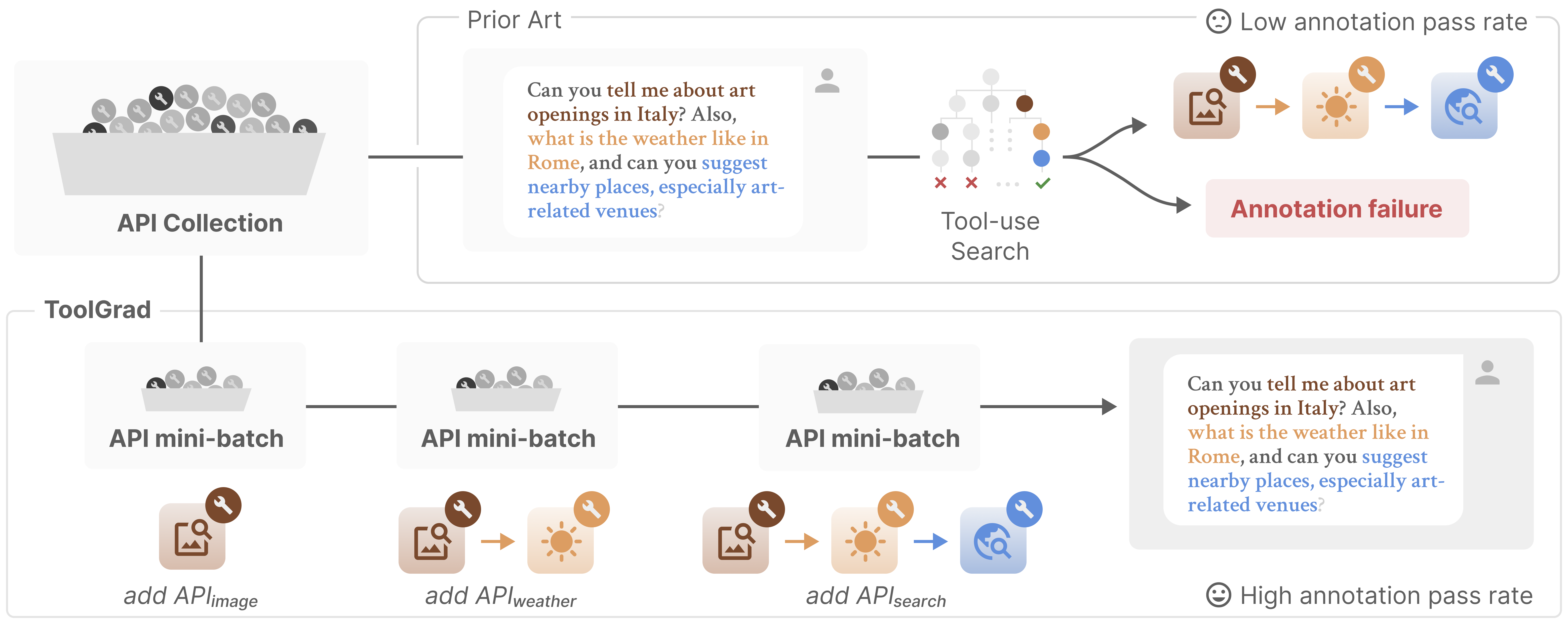
ToolGrad inverts traditional dataset generation by first creating verified tool-use chains using iterative API selection guided by textual gradients, then deriving user prompts from those successful workflows. This answer-first approach achieves higher pass rates and lower costs than query-first methods like DFS-based search. Fine-tuned Gemma-3 models on ToolGrad-500 outperformed proprietary models on the Berkeley Function Calling Leaderboard, with ToolGrad-12B scoring 83.1 versus Gemini 2.5-Pro’s 83.2. The framework uses API proposers, executors, selectors, and updaters to build complex, valid workflows without manual annotation, enabling scalable training data generation for agentic systems.
Source: ToolGrad: Efficient tool-use dataset generation with textual "gradients" · Google Research Blog
Runway’s abrupt model retirements expose fragility in AI video pipelines

Runway retired Gen-3 Alpha Turbo and Gen-4 Aleph overnight with no grace period, causing immediate pipeline failures for users who hardcoded model identifiers. Unlike previous deprecations that retained aliases, this abrupt cutoff reveals a structural risk: AI video models are updated frequently, and each version produces distinct visual outputs even under identical prompts. Successful pipelines now require logging exact model versions per shot, maintaining pre-tested fallback models, and monitoring provider changelogs as part of production schedules. Seed values are not portable across model versions, and continuity depends on metadata discipline, not code abstraction.
Source: Your AI Video Model Just Got Retired. Here's How to Keep Your Pipeline From Breaking Next Time. · HackerNoon · AI
What to watch next
The convergence of agentic commerce, deterministic AI orchestration, and rapid model obsolescence reveals a new operational reality: systems must be built with auditability, fallbacks, and structured data at their core. Whether in retail, healthcare, or media, the ability to track, validate, and adapt to evolving AI components determines resilience. The most successful deployments are not those with the most advanced models, but those with the most disciplined metadata and transition protocols.
Continue reading