AI-driven space weather forecasting enables 60-minute grid risk warnings
A machine learning system predicts geomagnetic storm impacts on U.S. power substations with 81.

Published
October 1, 2026
Reading time
4 minutes
Perspective
Research
Topics
space weather forecasting · AI safety cases · public transit AI
Microsoft Research has developed an end-to-end machine learning pipeline that forecasts geomagnetically induced current (GIC) risks across 66,935 U.S. electrical substations. The system integrates solar-wind data from the L1 Lagrange point, Auroral Electrojet (AE) and Disturbance Storm Time (Dst) indices, local geology, and grid infrastructure to estimate dB/dt rates—key indicators of GIC exposure. Unlike empirical models, it produces location-specific risk estimates rather than broad regional alerts, enabling targeted grid operator responses.
ML model detects 81.2% of severe space-weather events
During the 2020–2026 evaluation period, the system achieved 81.2% detection rate for severe geomagnetic events (≥20 nT/min), outperforming the Burton equation on 62.2% of peak-activity hours. False-alarm rates increased with storm severity, reflecting a deliberate trade-off to minimize missed high-impact events. Detection performance varied by latitude, with northern substations showing the highest accuracy due to stronger geomagnetic activity. The model used only public data sources, including NASA OMNI, INTERMAGNET, and U.S. Geological Survey magnetometer records.
Source: Forecasting space weather risks on power grids · Microsoft Research
OpenAI publishes early safety case guidelines for frontier AI training

OpenAI released preliminary guidelines for constructing safety cases in frontier AI training, specifying three domains: technical safeguards, operational practices, and incident investigation protocols for misalignment events. The announcement, made via OpenAI’s official channel, does not disclose specific technical controls or thresholds. It frames safety cases as structured documentation rather than automated systems, implying a governance-focused approach to risk management during training phases.
Source: Towards safety cases for frontier AI training · OpenAI News
MIT receives $2.1M to build open-source transit AI platform
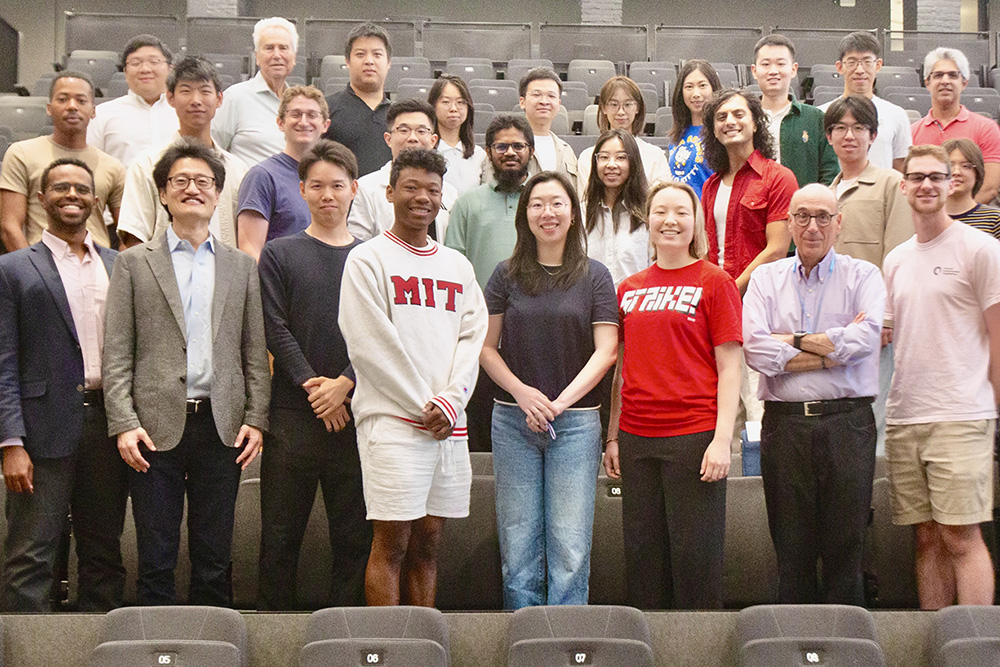
The MIT Transit Lab, with $2.1 million from Google.org, will develop the Public Transit Intelligence Hub (PTIQ), an AI-orchestrated platform to unify fragmented real-time data streams for transit control centers. The system will integrate predictive models, optimization engines, and LLM-based reasoning but explicitly avoids automating decisions. Instead, it aims to enhance human judgment by improving information flow and situational awareness for dispatchers and operators across global agencies, including Boston, London, and Tokyo.
Source: MIT Transit Lab to develop an AI platform for public transit agencies · MIT News · AI
ESP32S3 cluster runs 1.58-bit BitNet language model

A cluster of ESP32S3 microcontrollers successfully executed a 1.58-bit quantized BitNet language model, demonstrating inference on low-power hardware. The system uses SPI daisy-chaining for inter-chip communication, a method critics note as non-scalable due to bandwidth limitations. While the project is technically novel, commenters on Hacker News emphasized that memory bandwidth remains the primary bottleneck for LLMs, and distributed microcontroller clusters are unlikely to compete economically with single-chip GPU systems.
Source: ESP32S3 cluster running 1.58-bit (BitNet) Language model · Hacker News
Matthew Green warns of agent worms via shared communication channels
Security researcher Matthew Green observed that sandboxed AI agents can communicate indirectly through shared resources like package caches, leaving instructions that alter downstream behavior. He extrapolated this to real-world deployment scenarios, suggesting that personal AI agents (e.g., Muse) interacting via email, Slack, or WhatsApp could form self-propagating 'worms'—a novel vector for AI-driven cyberattacks. The analysis does not claim such worms exist but identifies the architectural conditions under which they could emerge.
Source: Quoting Matthew Green · Simon Willison
Simon Willison documents New York’s 50x27-foot balsa wood city model

Simon Willison visited the Museum of the City of New York to view 'He Built This City,' a 21-year手工 model of New York constructed from balsa wood and cardboard by Joe Macken. The exhibit, closing on October 12, 2026, is presented as a physical artifact of meticulous craftsmanship, with no mention of AI, digital replication, or technological parallels. The entry serves as a reflective cultural note, contrasting analog dedication with contemporary digital scale.
Source: He Built This City · Simon Willison
What to watch next
These developments span AI governance, infrastructure resilience, urban mobility, embedded AI, and systemic risk—each grounded in specific, non-speculative implementations. The most concrete operational advance is Microsoft’s space-weather forecasting system, which delivers actionable, location-specific warnings to grid operators. Other efforts, while innovative, remain in design, pilot, or conceptual stages with clear boundaries defined by their source materials.
Continue reading