GPT-6 Astra plays World of Warcraft using agent-wow
GPT-6 Astra successfully interacts with World of Warcraft via the agent-wow interface, demonstrating emergent agent behavior in a complex, unmodified game.

Published
October 2, 2026
Reading time
3 minutes
Perspective
Research
Topics
GPT-6 · agent-wow · World of Warcraft
On October 2, 2026, a demonstration of GPT-6 Astra playing World of Warcraft using the agent-wow tool was shared on Hacker News, sparking discussion among practitioners. The system, not explicitly detailed in architecture, enables the model to perceive and act within the game’s interface without native integration. Community comments reflect interest in AI-driven NPCs for cooperative gameplay and concerns over botting ethics, with users noting the potential for AI to enhance solo experiences or fill party slots when human players are unavailable. The demonstration marks a tangible application of general-purpose models in dynamic, real-time environments previously reserved for scripted bots.
GPT-6 Astra interacts with WoW via agent-wow
GPT-6 Astra successfully navigates World of Warcraft using the agent-wow interface, as reported in a Hacker News post with 68 points and 54 comments. The system operates without direct API access, relying on screen observation and simulated input to interact with the game. No technical specifications of the agent-wow tool are provided, but its existence confirms that general-purpose models can be adapted to complex, non-standardized environments through external orchestration. The demonstration does not reveal whether the model retains state across sessions or uses memory augmentation, only that it can perform actions in real time within the game world.
Source: GPT-6 Astra plays World of Warcraft for the first time with agent-wow · Hacker News
TEE-based FL system improves privacy verifiability
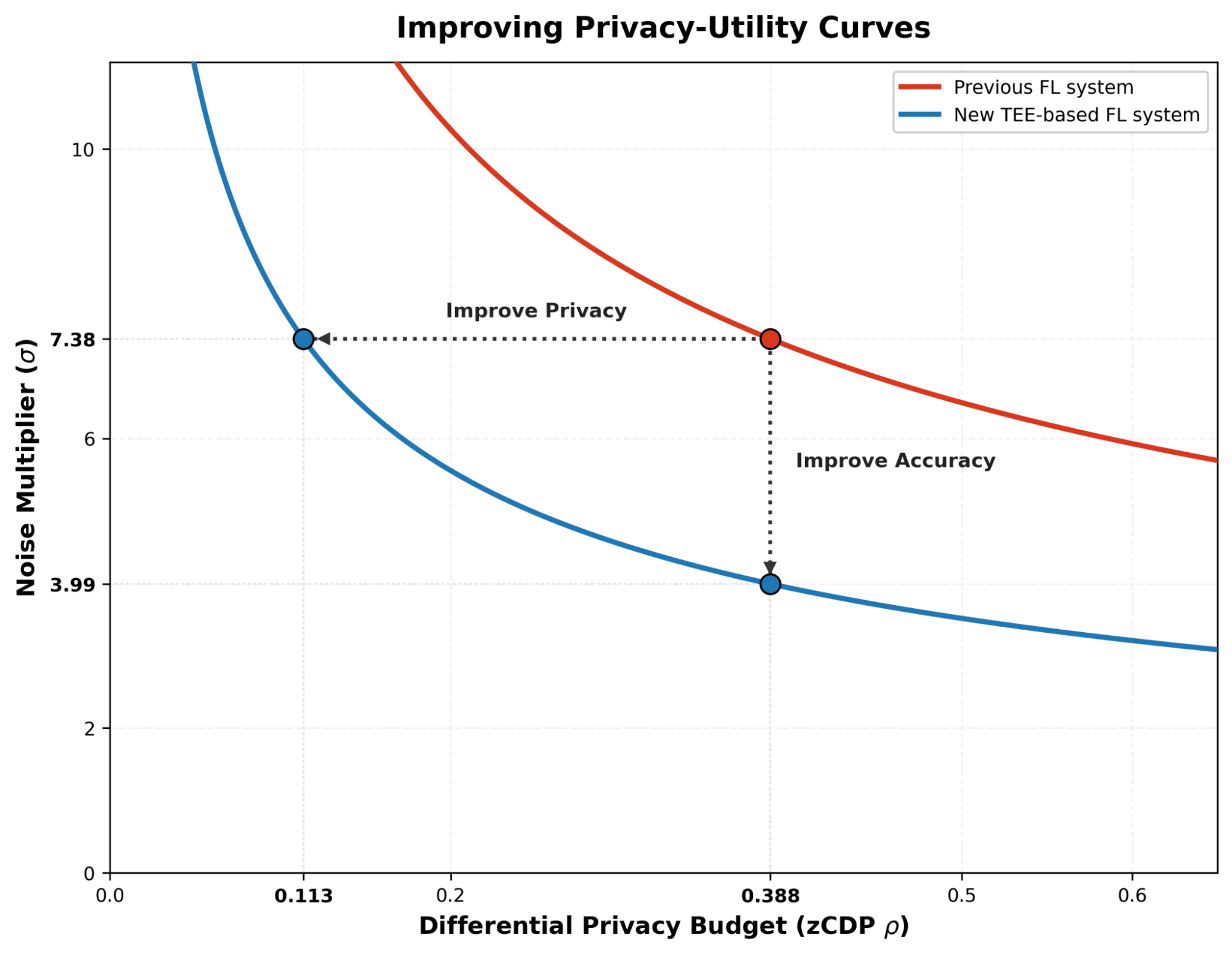
Google Research introduced a Federated Learning system using Trusted Execution Environments (TEEs) to provide externally verifiable privacy guarantees. The system encrypts client data, enforces access policies via a public transparency log, and executes training logic within TEEs that are remotely attestable. Only anonymized model weights are released to analysts, and all server-side computations are reproducibly built from open-source code. Gboard has adopted this system, achieving faster compute times than prior FL implementations. The design eliminates trust in server operators by ensuring data is only decrypted and processed within auditable TEEs.
Source: Toward provably private learning from federated data · Google Research Blog
Gemini 4 Argon enables 1M-token reasoning for enterprise tasks

Gemini 4 Argon supports up to 1 million output tokens, enabling deep, multi-step reasoning in software engineering, legal drafting, and cybersecurity. It autonomously patches vulnerabilities, optimizes quantum algorithms, and migrates 800K+ lines of C/C++ code to Rust. On DeepSWE v1.1, it achieves 77.9% accuracy, and on AutomationBench, it ranks #1 with 51.3%. The model is currently restricted to trusted cyber defenders via the Fairwind Program, with no public release date. Its performance on Vals Index and LVBench indicates strength in domain-specific knowledge work requiring long-horizon reasoning and multimodal understanding.
Source: Gemini 4 Argon: our next era of frontier intelligence · DeepMind Blog
What to watch next
These developments highlight distinct trajectories in AI deployment: GPT-6 Astra demonstrates emergent agent behavior in unstructured environments, Gemini 4 Argon enables enterprise-scale reasoning with unprecedented token capacity, and Google’s TEE-based FL system advances verifiable privacy in decentralized learning. Each operates within its own domain—gaming, professional workflows, and data privacy—with no overlap in methodology or application.
Continue reading