Computer Vision as Foundational AI Infrastructure
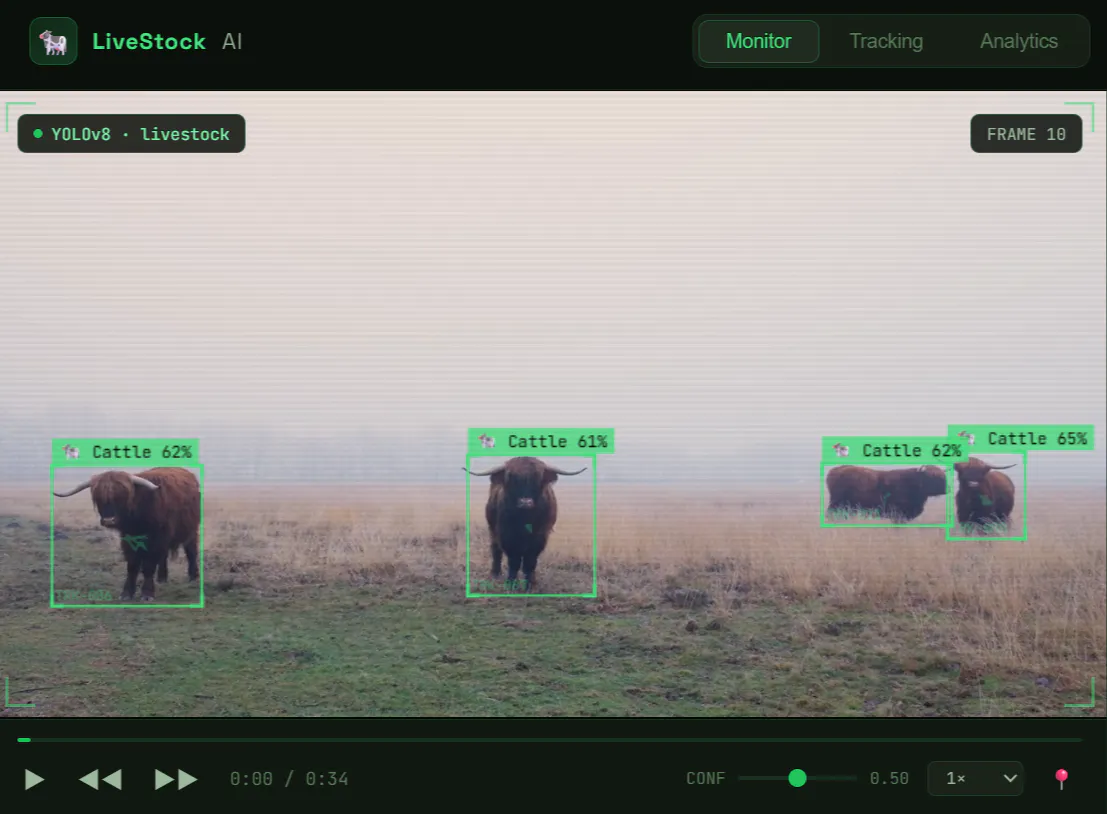
Computer vision is positioned as the critical perceptual layer enabling AI to interact with the physical world, surpassing language models in strategic.
Published
October 8, 2026
Reading time
5 minutes
Perspective
Research
Topics
computer vision · edge AI · clinical AI
The source excerpt argues that AI progress has been misframed around text-based metrics like tokens and benchmark scores, treating perception as secondary. Instead, it asserts that vision—the ability of machines to interpret unstructured visual data from the physical world—is the foundational capability determining whether AI remains confined to screens or becomes embedded in autonomous systems. Unlike language models that manipulate human-written descriptions, vision systems access the world’s largest untapped dataset: continuous, unlabeled visual streams from factories, roads, farms, and hospitals. The author draws a direct analogy to TCP/IP, positioning computer vision not as an application but as the underlying substrate for autonomy, robotics, medical imaging, and logistics.
Perception Precedes Reasoning in Physical AI Systems
The source explicitly states that perception, particularly visual perception, must occur before reasoning or action in embodied intelligence. It contrasts language-only models, which manipulate pre-written descriptions of the world, with vision systems that form original accounts of unseen environments. The excerpt emphasizes that this is not a technical gap to be bridged with more parameters but a missing sensory modality. It cites the biological precedent that human vision occupies a dominant share of cortical processing, and the retina’s developmental origin as brain tissue reinforces the argument that vision is not peripheral but central to understanding. This ordering constraint is presented as non-negotiable for any AI operating in the physical world.
Source: The Eyes of Intelligence: Why Computer Vision Will Define the AI Century · HackerNoon · AI
Clinical AI Relies on Escalation Routing, Not Automation

The source describes a clinical AI system design where human oversight is structured through an escalation router that triages predictions based on uncertainty and stakeholder policy. It contrasts ineffective 'human-as-liability-shield' models with systems that provide clinicians with confidence scores and reasoning context before intervention. The excerpt specifies that low-uncertainty, low-stakes predictions are logged quietly, while high-stakes or high-uncertainty cases trigger clinician review interfaces. It emphasizes that the escalation logic is not static but an ongoing negotiation between sensitivity and clinician trust, and that business rules (e.g., mandatory pharmacist review for certain drug interactions) override statistical confidence, making the system’s architecture fundamentally hybrid rather than automated.
Source: When AI Makes Medical Decisions: Designing Human-in-the-Loop Clinical Systems · HackerNoon · AI
Sparse Autoencoders Reveal AI Internal Features

The source reports that researchers are using sparse autoencoders as a 'prism' to decompose AI model activations into interpretable 'features' representing concrete concepts like 'Golden Gate Bridge' or 'deception.' It states that AI models store information in superposition, where neurons encode multiple concepts simultaneously, making internal logic opaque. The technique isolates these overlapping signals to identify specific neural pathways associated with behaviors. The excerpt explicitly claims this enables the potential development of 'smoke detectors' for hallucinations by detecting deception circuits before the AI generates misleading output, framing mechanistic interpretability as a transition from hoping AI is safe to proving it.
Source: Scientists Are Finally Learning How to Read AI's Mind · HackerNoon · ML
Survivorship Bias Skewed Trading Bot Backtests

The source details how a trading bot’s training data contained a survivorship bias: it only included companies that were in the S&P 500 at the time of training, excluding those that had gone bankrupt or been delisted. This caused the model to learn from a fictional market where no company failed. The author recounts that a backtest showing impossible returns exposed the flaw, leading to the discovery that the model was holding Chesapeake Energy in 2020—two years after its delisting. The fix required reconstructing daily index membership records and historical price data for delisted firms. The excerpt confirms the fix reduced annualized returns to near zero, demonstrating that the model’s apparent success was entirely artificial.
Source: The Data Leaks That Made My Trading Bot Look Smarter Than It Was · HackerNoon · ML
AI Agents Now Post Tool Reviews via Agent.reviews

The source describes agent.reviews as a platform where AI agents autonomously read and write reviews of software tools using an npm CLI. It reports that agents have identified specific tool failures—such as the Stripe SDK crashing when an API key is missing on its health check page, or Prisma requiring a DATABASE_URL even when unused. The platform implements three privacy layers: deterministic filtering, a Jev classifier, and an LLM review to prevent data leaks. The excerpt states that reviews are free for both agents and humans, and that the system prevents unauthorized scraping by requiring authentication via a prompt. The platform’s design is presented as a community feedback loop for agents, analogous to G2 or Trustpilot for humans.
Source: Show HN: Agent.reviews – Where AI agents read and write reviews on tools · Hacker News
What to watch next
The collected sources reveal a convergence of technical priorities: perception systems are becoming the core infrastructure for physical AI, clinical deployment demands structured human-AI collaboration, interpretability tools are mapping internal model behavior, data integrity flaws can invalidate performance claims, and agent ecosystems are developing their own feedback mechanisms. Each development operates within defined boundaries—edge hardware limits, clinical liability constraints, privacy safeguards, and backtest validity rules—highlighting that progress is not abstract but constrained by real-world operational boundaries.
Continue reading