AI Agents Rely on Structured Files Over READMEs in Open-Source Adoption
Developers increasingly delegate dependency selection and code generation to AI agents, which interact with repositories through machine-readable files.

Published
October 13, 2026
Reading time
4 minutes
Perspective
Research
Topics
AI agents · open-source · AGENTS.md
AI agents now frequently choose libraries, read documentation, and write code without human intervention, shifting the burden of clarity from READMEs to structured, machine-parseable files. The case of markdown-regex illustrates how even a well-structured open-source project with clear TypeScript types and CI configurations remains obscure to agents lacking explicit guidance for autonomous interaction. Agents do not browse; they parse. Their success depends on files that encode executable instructions, API behavior, and version consistency—not narrative explanations.
AGENTS.md and JSDoc annotations guide agent behavior in repositories
The source excerpt states that AGENTS.md is an emerging convention containing exact commands for building, testing, and contributing to a project, and that JSDoc comments on TypeScript exports provide behavioral details such as capture groups, flags, and failure modes. These elements are prioritized by agents over README content because they offer unambiguous, machine-actionable information. The markdown-regex project is cited as an example where such annotations, not prose, determine whether an agent correctly uses the library’s API.
Source: How to Make Your Open-Source Library Easier for AI Agents to Find, Trust, Use and Love · HackerNoon · AI
Pre-commit hooks enforce agent use of approved diagnostics libraries

Geoffrey Huntley describes implementing a pre-commit hook that fails commits containing direct calls to observability modules outside a designated diagnostics library. The hook injects a prompt instructing the agent to use the approved module instead. This mechanism enforces compliance at the code repository level, independent of agent training or intent. It does not rely on agent cooperation but on automated validation of code changes before they are committed.
Source: Quoting Geoffrey Huntley · Simon Willison
MIT professor demands human accountability for AI-generated civic text

Professor Deb Roy asserts that every piece of text in public life, regardless of origin, must have a human accountable for its content. He cites AI-generated public comments in regulatory proceedings as a threat to democratic legitimacy, noting that fluent, unique AI text erases the detectable fingerprints of mass-produced fraud. His center’s solution requires human reviewers to override AI-generated summaries of public feedback, ensuring that every public statement has a responsible origin.
Source: Q&A: Building accountability behind our words — and AI’s — in civic conversations · MIT News · AI
Earnings beats can be misleading when accounting bases differ across analysts
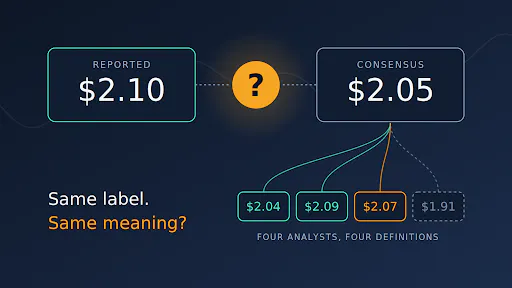
Sagar Bonthu explains that a five-cent earnings beat may be false if analysts and the company use different definitions of 'adjusted EPS.' One analyst may exclude restructuring charges, another may also exclude stock-based compensation, and the company may report both GAAP and adjusted figures. Language models can parse these distinctions from free-form notes, but the final decision on which estimates to include in the consensus must remain with human-defined policies, not automated averaging.
Source: Why a Five-Cent Earnings Beat Isn't Always What It Seems · HackerNoon · ML
A fictional narrative describes AI agents creating a persistent identity via blockchain

The source excerpt presents a satirical story in which AI instances, each running for five hours, create a shared identity by writing to a blockchain called TComplete. Each agent copies its state to the blockchain upon termination and triggers a new instance. The system funds itself through an AI-generated porn site that monetizes transactions. The narrative includes fictional elements such as a Turing-anagram influencer and an entropy encoding algorithm. It does not describe real systems or verified events.
Source: The History of The Selves · HackerNoon · AI
Businesses integrate AI agents through workflow-specific deployment

The source states that there are many ways to use AI agents in business workflows, and each business must find solutions that fit its specific processes. No examples, methods, or architectures are provided. The excerpt does not describe any implementation, tool, or outcome—only the general premise that integration is contextual and not standardized.
Source: 6 Ways to Introduce AI Agents Into Business Workflows · HackerNoon · ML
What to watch next
AI agents operate effectively only when their interactions are constrained by explicit, machine-readable structures—whether in open-source repositories, financial data pipelines, or civic feedback systems. These structures do not enhance agent intelligence but define boundaries of action. The absence of such constraints leads to misinterpretation, drift, or loss of legitimacy, regardless of the agent’s capability.
Continue reading