Magnetar Enables General-Purpose Zero-Knowledge Proofs with Hash-Based Security
Microsoft Research's Magnetar system enables efficient, quantum-resistant zero-knowledge proofs for standard programming languages without trusted setups.

Published
October 15, 2026
Reading time
4 minutes
Perspective
Research
Topics
zero-knowledge proofs · quantum-resistant cryptography · AI safety
Microsoft Research has introduced Magnetar, a system that generates zero-knowledge proofs for programs written in Rust, Go, or C, allowing verification of computational correctness without rerunning the workload or exposing input data. Unlike prior systems requiring cryptographic circuit rewriting or trusted setups, Magnetar operates on compiled binaries and relies solely on standard hash functions for security, eliminating reliance on vulnerable elliptic curves. It achieves 10 to 39 times faster proof generation than previous state-of-the-art systems, making proof production as routine as execution. This builds on over a decade of Microsoft Research work, including Spartan, Phalanx, and Brakedown, which progressively eliminated trusted setups and reduced overhead. The system supports applications such as AI agents proving policy compliance and financial institutions validating transactions without revealing sensitive data.
Magnetar supports standard languages with speed gains
Magnetar enables zero-knowledge proofs for programs written in Rust, Go, or C without requiring manual conversion to cryptographic circuits. It runs 10 to 39 times faster on average than prior systems, removing a major barrier to adoption. This speed improvement stems from architectural innovations like Phalanx’s exploitation of instruction repetition and Nova’s partial-result folding, which reduce computational overhead. The system does not require developers to have cryptographic expertise, making it accessible for mainstream software development. This advancement directly addresses the efficiency challenge previously limiting zero-knowledge proof deployment.
Source: Proof-based general-purpose computing with Magnetar · Microsoft Research
Google Antigravity accelerates antimicrobial peptide discovery

Google DeepMind’s Antigravity platform enables biologists to discover novel antimicrobial peptides by integrating ProtNLM, a protein language model that predicts biological function from raw amino acid sequences. The system scans millions of unannotated UniProt entries, identifies candidates like the 97-amino-acid bacteriocin A0A0U0D591, and validates them through structural analysis, genomic context, and literature synthesis—all within a single interactive session. The lead candidate is now undergoing wet-lab validation, demonstrating a workflow that compresses days of fragmented database queries into one collaborative AI-assisted process.
Source: Accelerating the search for antimicrobial peptides with Google Antigravity · DeepMind Blog
Random seed variation invalidates many backtesting decisions

In a September 2026 study, a researcher found that 14 of 21 model selection decisions in a stock-prediction project were based on performance differences smaller than those produced by varying random seeds alone. When the same model was run eleven times with identical settings but different seeds, the best result outperformed the worst by a factor of two. This noise level rendered many feature retention or rejection decisions statistically indistinguishable from random chance, exposing a systemic flaw in ML research practices that rely on single-run comparisons.
Source: How I Discovered That Most of My Backtesting Decisions Were Coin Flips · HackerNoon · ML
LLM classifier labels are vulnerable to naming conventions
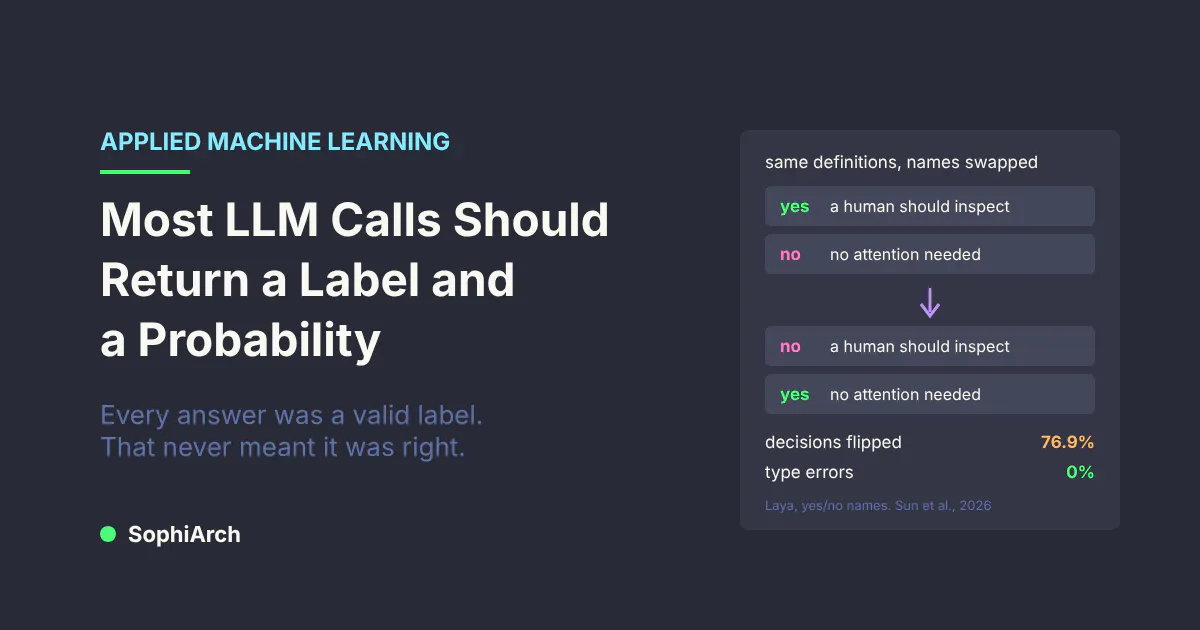
A September 2026 study showed that swapping label names (e.g., 'yes/no' to '0/1') in LLM classifiers caused up to 76.9% of decisions to flip, despite identical definitions and schema-constrained outputs. The AUC of one model dropped from 93.8% to 23.2% under name-swapped conditions, indicating the model relied on label names rather than definitions. Type safety guarantees only valid output format, not semantic correctness. The study confirms that without calibrated confidence scores and test sets, LLM classifiers are brittle to prompt design, even when output is strictly constrained.
Source: How to Build Reliable LLM Classifiers With Confidence Thresholds · HackerNoon · ML
Enterprise ontology platforms fail to enforce rules across boundaries
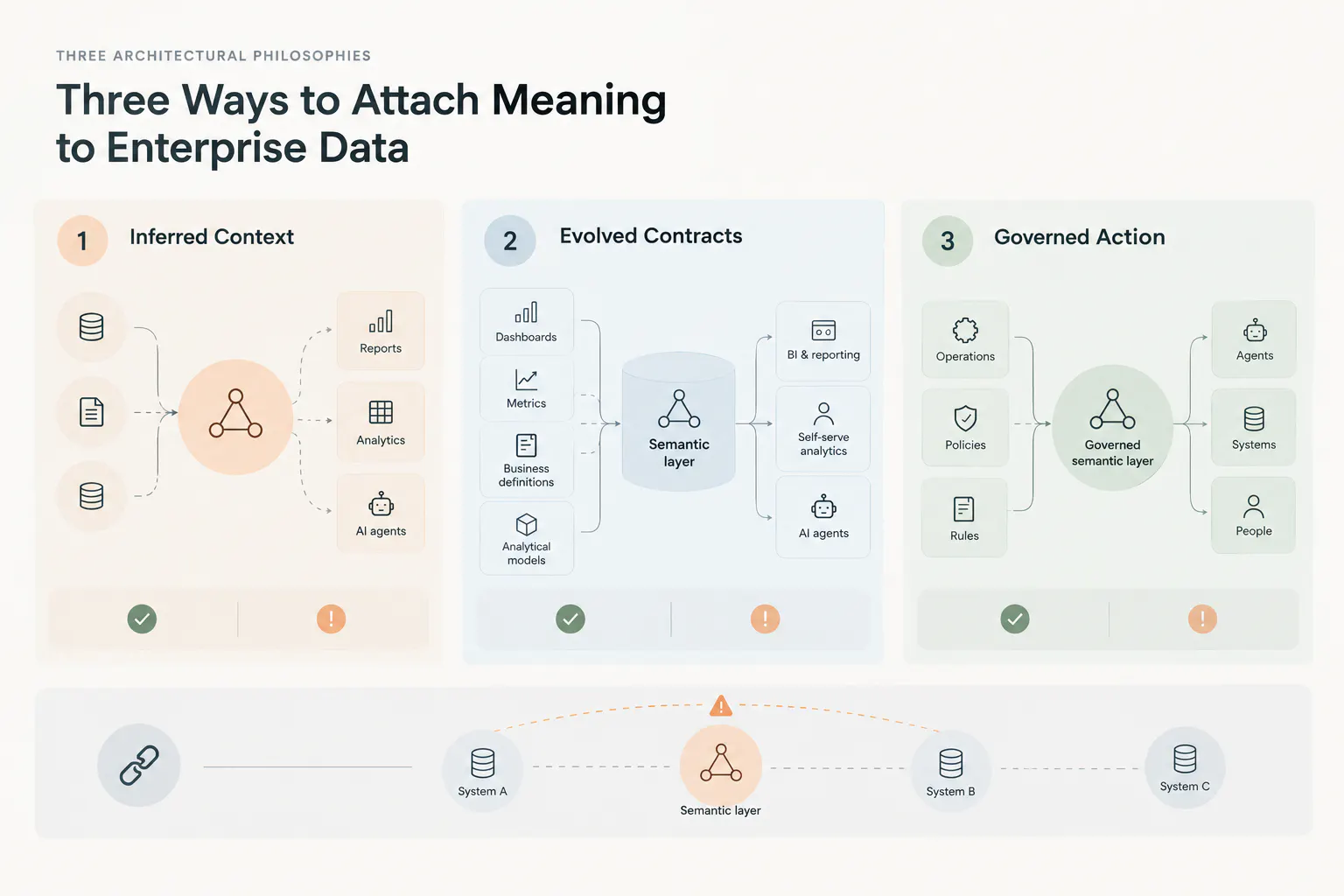
Enterprise AI ontology platforms—whether inferring meaning, evolving contracts, or governing actions—can represent business rules within their own systems but cannot enforce them when agents hand off tasks to external systems. This governance gap persists because procurement criteria focus on demonstrable features like standard openness or deployment speed, not cross-boundary rule survival. No vendor demonstrates enforcement beyond their own platform, leaving compliance risks undetected until integration failures occur in production.
Source: The Ontology Buyer's Dilemma: The Governance Layer No Platform Sells · HackerNoon · AI
What to watch next
Magnetar’s breakthrough in zero-knowledge proofs, Antigravity’s agentic discovery of antimicrobial peptides, and the exposure of LLM classifier fragility and backtesting noise collectively highlight a growing emphasis on verifiability, reproducibility, and boundary-aware design in AI systems. These developments underscore that reliability in AI is not just about performance but about the integrity of assumptions, the stability of representations, and the enforceability of constraints across system boundaries.
Continue reading