AI models track fetal motion and atomic structures with physics-informed design
MIT researchers developed E(3)-Pose to correct fetal MRI motion artifacts using symmetry constraints and a multimodal model to link 3D atomic structures.
Published
October 19, 2026
Reading time
3 minutes
Perspective
Research
Topics
fetal MRI · symmetry learning · materials science
In 2026, two distinct AI breakthroughs from MIT demonstrate how embedding physical principles into model architecture improves diagnostic and scientific reasoning. One system, E(3)-Pose, leverages left-right symmetry to stabilize fetal brain MRI scans during motion, while another multimodal model aligns 3D crystal structures with textual descriptions to predict material properties. Both approaches reject pure data-driven learning in favor of structured, physics-grounded representations.
E(3)-Pose embeds fetal head symmetry into MRI motion correction
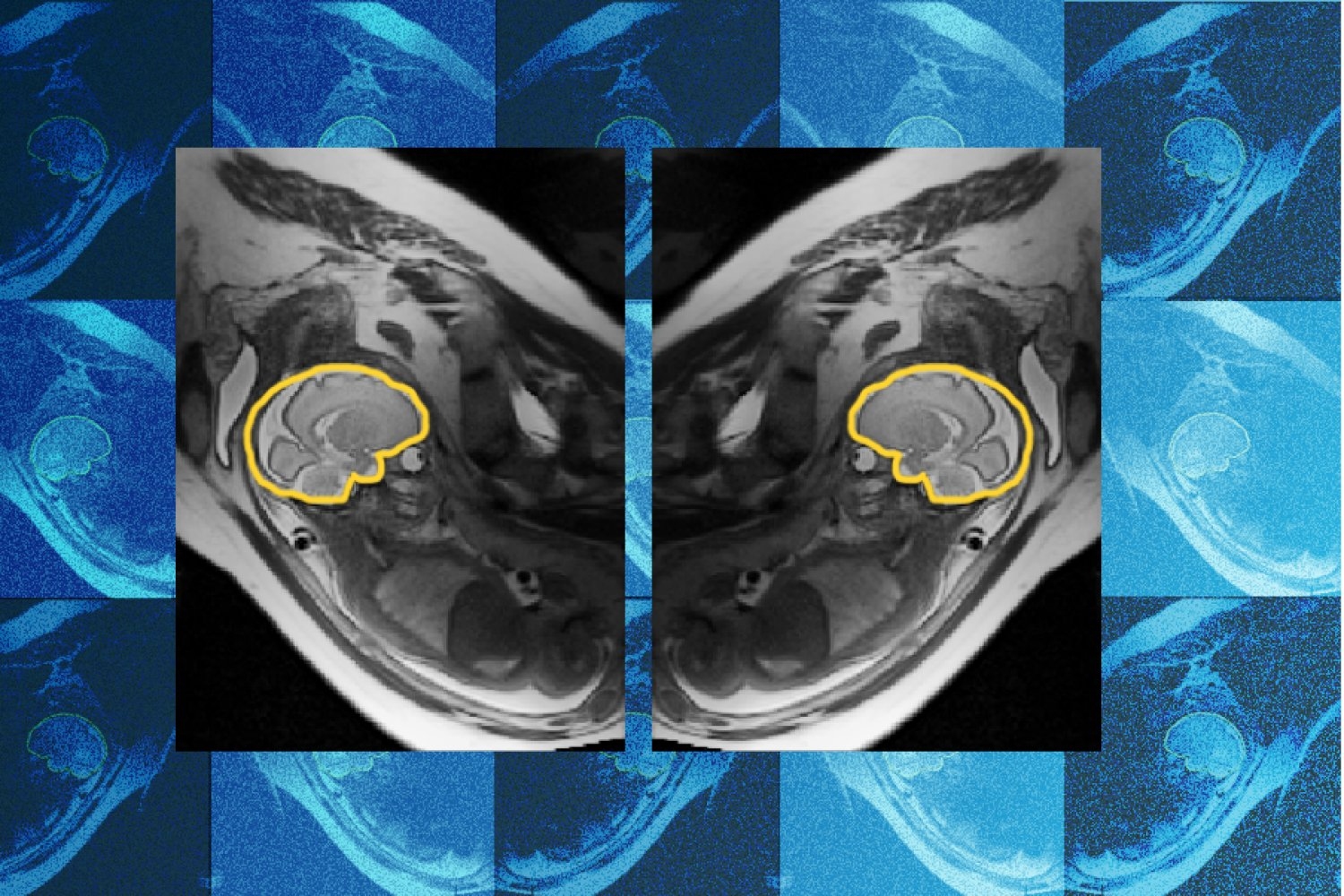
Researchers at MIT and Boston Children’s Hospital developed E(3)-Pose, a deep learning model that integrates the physical principle of left-right symmetry into its architecture to track fetal head movement during MRI scans. This design allows the model to correct misaligned 2D image slices caused by fetal motion, reducing gaps and orientation errors in volumetric reconstructions. The model was trained using MRI data collected from third-trimester fetuses, with additional support from a specialized acquisition sequence developed by co-author Borjan Gagoski. The system’s clinical impact lies in enabling higher-quality scans without requiring repeat visits, though it currently does not apply to second-trimester fetuses due to greater motion and smaller size.
Source: Why teaching AI about symmetry could make prenatal diagnosis more reliable · MIT News · AI
Multimodal AI links 3D atomic structures to material properties via synthetic narratives

MIT researchers created a vision-language model that fuses 3D atomic arrangements of crystalline materials with natural language descriptions derived from experimental papers and computational databases. Unlike text-only models, this system uses contrastive learning to align visual geometric features with linguistic narratives, enabling it to predict material properties such as suitability for lithium-ion battery electrolytes. The model outperformed baselines trained solely on published text, identifying candidates independently validated by materials scientists. The approach mimics AlphaFold’s success in biology by grounding predictions in structural geometry rather than textual patterns alone.
Source: Giving AI a “crystal clear” view of the materials world · MIT News · AI
Edge AI in livestock monitoring uses collars and cameras to detect deviations before clinical signs
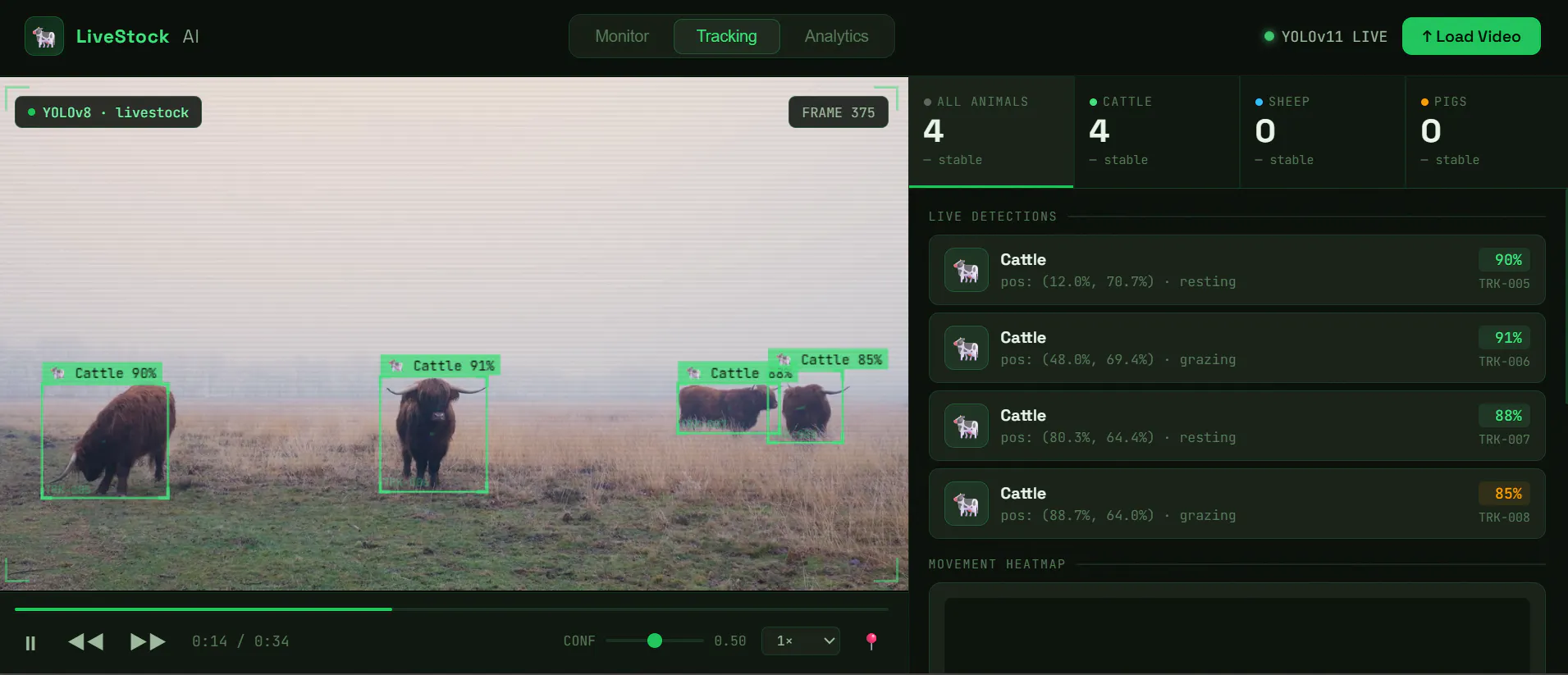
Livestock monitoring systems now deploy edge AI via solar-powered collars and barn-mounted cameras to detect behavioral anomalies in cattle before visible symptoms appear. Halter’s collars use GPS, accelerometers, and satellite connectivity to enforce virtual fencing and track movement patterns, while camera systems analyze gait, body condition, and feeding behavior with over 90% accuracy on tasks like lameness detection. These systems shift from reactive observation to continuous, individualized monitoring, enabling early intervention for disease or estrus. The technology operates in low-connectivity environments and handles non-cooperative subjects, making it a practical stress test for real-world AI deployment.
Source: From Collars to Cameras: How AI Is Rewiring Livestock Monitoring in 2026 · HackerNoon · ML
Vision-language models unify image and text through shared embedding projection

Vision-language models (VLMs) operate by projecting image features from a vision encoder into the same embedding space as text tokens using a multilayer perceptron, enabling a single decoder to attend to both modalities. This architecture allows VLMs to ground language in visual reality—for example, linking the word 'sunset' to pixel patterns rather than textual descriptions alone. Training requires massive, aligned image-text datasets like LAION-5B and VQA, which are far more complex to curate than text-only corpora. The model’s performance is critically dependent on the quality of this alignment, not just model scale.
Source: What Are Vision-Language Models (VLMs) and How Do They Work? · HackerNoon · AI
What to watch next
These developments highlight a growing trend in AI: embedding known physical or structural constraints—such as symmetry, atomic bonding, or multimodal alignment—into model design improves reliability and interpretability. Rather than relying solely on data volume, systems like E(3)-Pose and the crystalline materials model achieve better outcomes by constraining learning to physically plausible spaces. This shift reduces reliance on noisy or biased datasets and enhances generalization in high-stakes domains.
Continue reading