Flint-interactive Enables AI Agents to Generate Interactive Data Visualizations
Microsoft Research introduces Flint-interactive, a language allowing AI agents to create dynamic, user-controllable visualizations with click-to-filter.

Published
October 22, 2026
Reading time
4 minutes
Perspective
Research
Topics
interactive visualization · AI stack complexity · multi-agent orchestration
Microsoft Research has released Flint-interactive, a high-level language designed to let AI agents generate interactive data visualizations without requiring manual low-level code. The system translates user interactions—such as clicking, brushing, or zooming—into semantic events that trigger automatic updates across connected charts, tables, and documents. This eliminates the need for developers to manually manage rendering logic, hit testing, or dependency resolution, which have historically caused layout errors and debugging overhead in custom interactive visualizations. Flint-interactive operates atop Flint, using a compiler to handle visual state transitions, enabling agents to produce dashboards and data stories that respond to user exploration in real time.
Flint-interactive allows semantic interaction specification
Flint-interactive separates visual logic from interaction logic by using a compiler to convert raw user inputs like clicks and drags into semantic events—such as 'selected country' or 'filtered time range'—which then trigger predefined or custom update operators. This abstraction lets users and agents describe complex interactions, like highlighting linked data across a chart and a table, using simple high-level commands rather than low-level rendering code. The system supports preset interactions like linked brushing and enables bespoke handlers via a programming API, allowing dynamic labeling or annotation without manipulating renderer-specific marks.
Source: Flint-interactive: A language for creating interactive data visualizations · Microsoft Research
Production AI systems now prioritize stack complexity over model performance
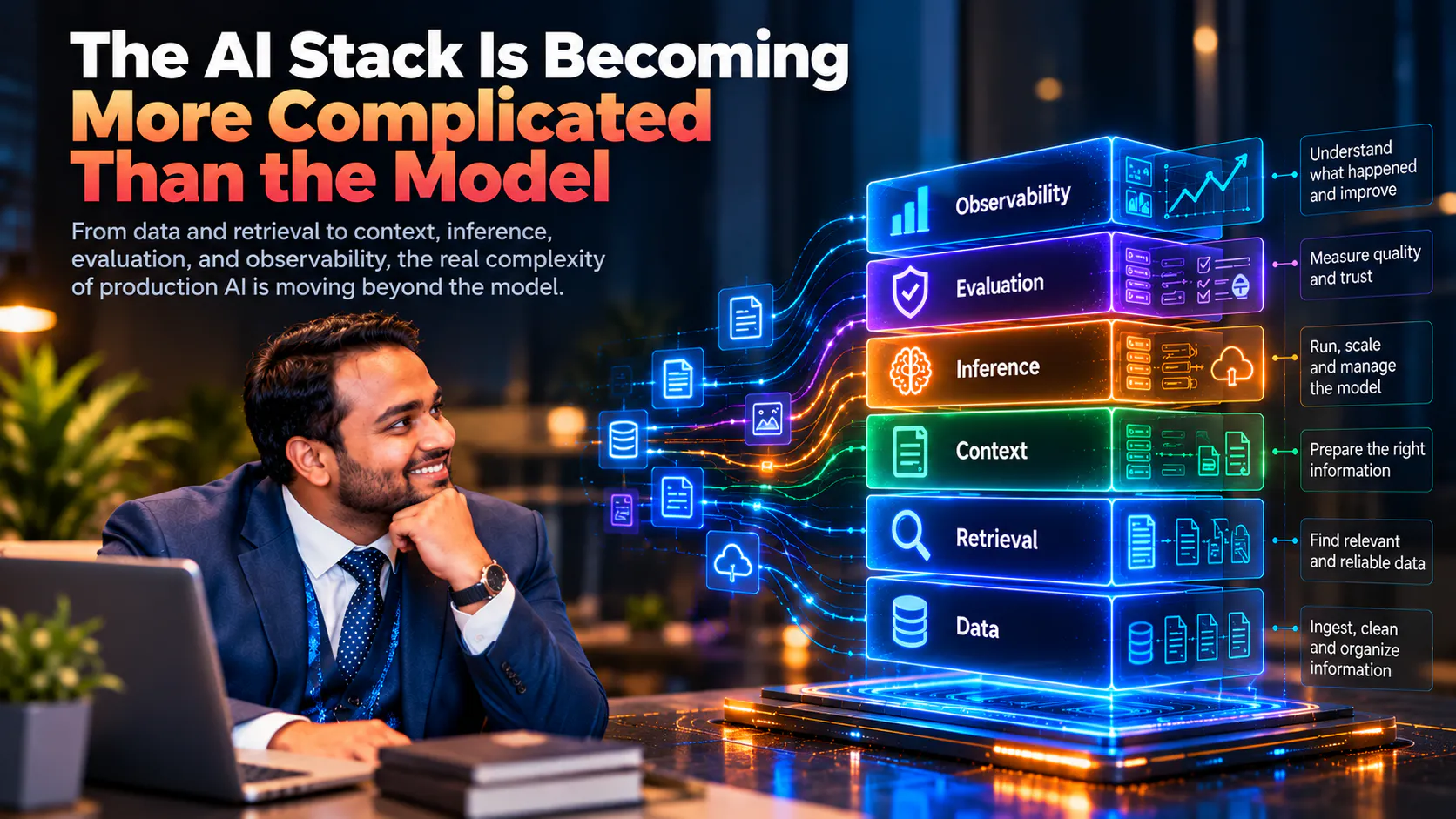
Production AI reliability increasingly depends on data pipelines, retrieval systems, context engineering, and observability rather than model accuracy alone. As systems integrate external data from databases, APIs, and event streams, failures emerge not from the model but from handoffs between components—such as stale embeddings, incomplete indexing, or misaligned context windows. The model becomes one node in a larger engineering stack where data quality, latency constraints, and security boundaries determine outcomes, shifting focus from benchmarking models to auditing the entire execution path.
Source: The AI Stack Is Becoming More Complicated Than the Model · HackerNoon · ML
Coding agents require isolated execution to prevent state corruption

Multi-agent code generation fails when concurrent models write to shared repositories, causing dependency overwrites and merge conflicts. The solution involves isolating each agent in separate Git worktrees, allowing simultaneous development without interference. For example, Codex writes UI code in one worktree, Groq generates tests in another, and Claude handles final integration. This architecture enforces strict role boundaries and automated verification before merging, ensuring that agent outputs remain deterministic and compatible with version-controlled workflows.
Source: Stop Treating Coding Agents Like Chatbots · HackerNoon · AI
AI-generated code in CS coursework often masks lack of understanding
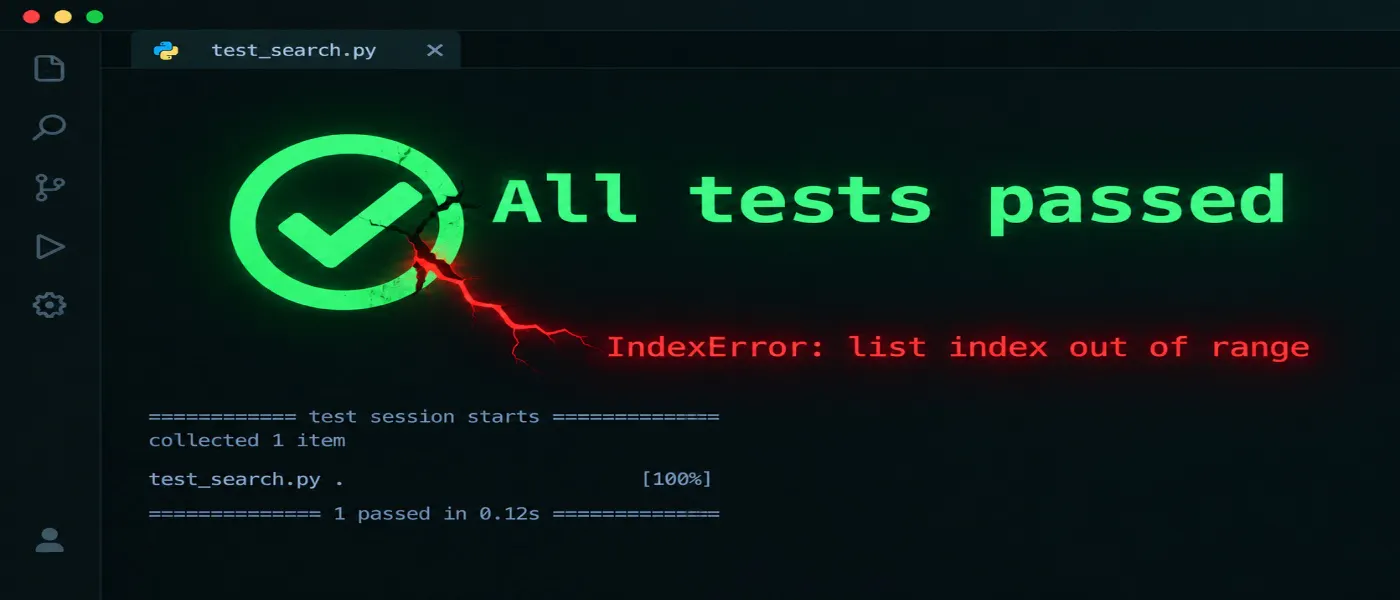
Students submitting AI-generated code risk failing assessments because assignments evaluate conceptual understanding, not just functional output. A real example shows an AI-produced binary search with an off-by-one bug: high is initialized as len(arr), treating it as exclusive, but subsequent logic treats it as inclusive. The code passes basic tests but fails on edge cases like searching for values beyond the array bounds. Without understanding the algorithm’s logic, students cannot diagnose such flaws during oral exams or viva sessions where tools are unavailable.
Source: AI Can Write Your CS Assignment. But Can You? · HackerNoon · AI
Anthropic donates Agent Skills standard to Agentic AI Foundation

Anthropic has transferred ownership of the Agent Skills specification to the Agentic AI Foundation (AAIF), a standards body co-founded with Block and OpenAI under the Linux Foundation. This move follows the earlier donation of the Model Context Protocol (MCP) and aims to ensure agent capabilities remain open, vendor-neutral, and community-governed. The AAIF now hosts both MCP and Agent Skills, enabling interoperability across platforms and reducing proprietary lock-in in agent ecosystems.
Source: Donating Agent Skills to the Agentic AI Foundation · Simon Willison
Machine learning trading system failed startup viability test

After 21 months of development, a machine learning trading system was evaluated against five pre-defined gates, including differentiation, regulatory fit, and economics. Two independent AI models concluded the system offered no advantage over low-cost index funds and was viable only as a personal investment tool. The evaluation rejected sunk cost arguments and required evidence of unique value, concluding that the edge was statistically indistinguishable from noise and insufficient to justify a startup.
Source: Why My Machine Learning Trading System Couldn't Justify a Startup · HackerNoon · ML
What to watch next
These developments reveal a maturing AI landscape where interaction design, system reliability, agent orchestration, educational integrity, standards governance, and empirical validation are becoming as critical as model capabilities. Success now depends on structured workflows, clear boundaries, and measurable outcomes rather than isolated model performance.
Continue reading