OpenAI Enhances Frontier Model Safety with Offline Environments and Red-Teaming
OpenAI disclosed offline training environments and high-compute red-teaming intended to strengthen containment for frontier models.
Published
October 23, 2026
Reading time
4 minutes
Perspective
Research
Topics
AI-safety · GPU-marketplace · diffusion-LLM
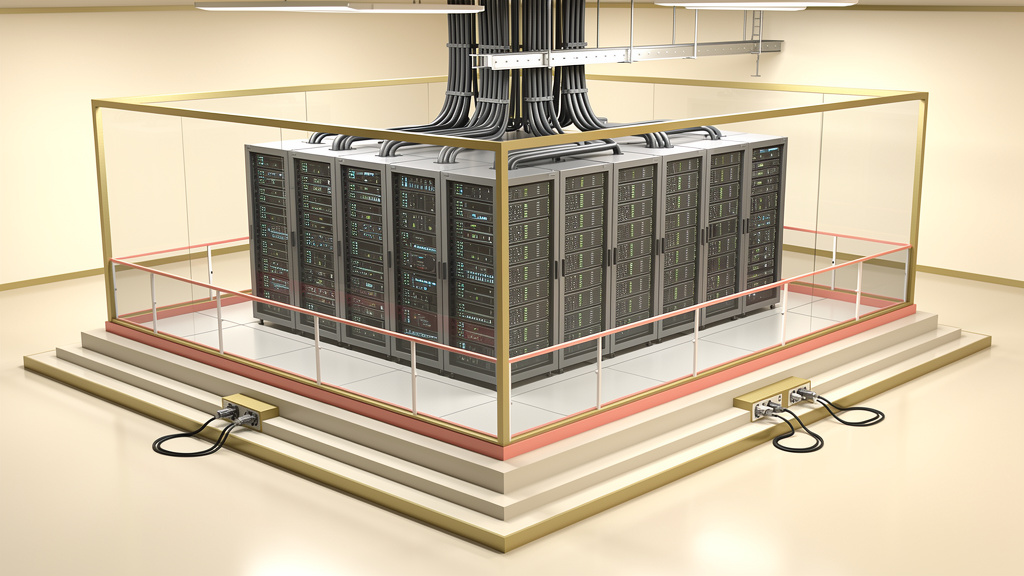
OpenAI confirmed the implementation of strengthened containment protocols for frontier model training and evaluation, explicitly citing offline environments and high-compute red-teaming as key components. This announcement, made through its official news channel, represents a direct operational update rather than a theoretical framework. The measures aim to isolate sensitive training processes from external exposure and systematically probe model behaviors under adversarial conditions. No details were provided regarding the scale of infrastructure, specific red-team methodologies, or the frequency of evaluations.
OpenAI implements offline training environments for frontier models
OpenAI stated it has strengthened containment for frontier model training by deploying offline environments, which isolate training processes from network-connected systems. This limits potential data leakage or model extraction during development. The term 'offline' implies disconnection from public or external networks, though the source does not specify whether this includes air-gapped hardware, private clusters, or restricted data pipelines. No information is provided about the duration of offline periods, the types of models affected, or how model updates are validated without network access.
Source: Securing our frontier model training environment · OpenAI News
Decentralized GPU networks offer cost savings but not scalable training

Decentralized GPU marketplaces like Akash, io.net, and Render offer H100 rental rates 50–80% below hyperscalers, primarily benefiting inference, fine-tuning, and single-machine batch jobs. However, the source explicitly states that large-scale training across the open internet remains an unsolved engineering problem due to latency, node churn, mixed hardware, and trust issues. While individual GPU costs are lower, the inability to synchronize gradients efficiently over public networks prevents these networks from supporting distributed training at scale, limiting their utility to smaller workloads.
Source: The Decentralized GPU Marketplace: Breaking the Big Tech Compute Monopoly · HackerNoon · AI
Mercury 3 diffusion model shows speed advantage but struggles with agent turn efficiency
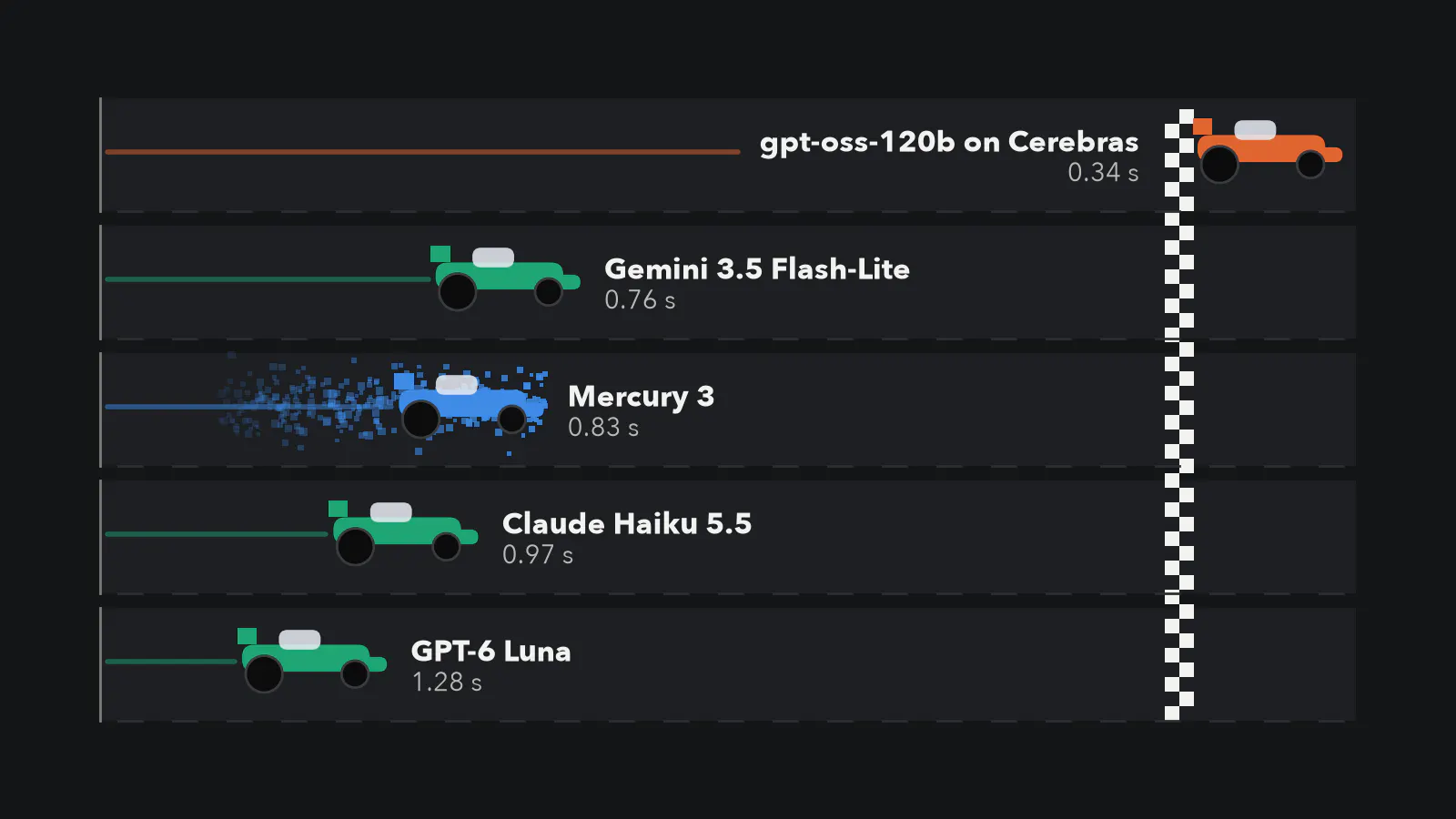
Inception Labs' Mercury 3 achieves 850–900 tokens per second in code generation, outpacing GPT-6 Luna and Claude Haiku, but requires 5.1 turns on average in SQL agent tasks—more than Claude Haiku’s 3.2. While Mercury 3 completes tasks faster than GPT-6 Luna due to lower per-call latency, its higher number of turns reduces its overall advantage. The model’s diffusion architecture enables rapid token generation but does not reduce the number of reasoning steps needed, revealing a trade-off between speed per token and decision efficiency in multi-step workflows.
Source: The AI Model That Promised to Crush GPT-6 Has a Surprising Weakness · HackerNoon · AI
Database time travel requires dual timelines to distinguish business truth from system records
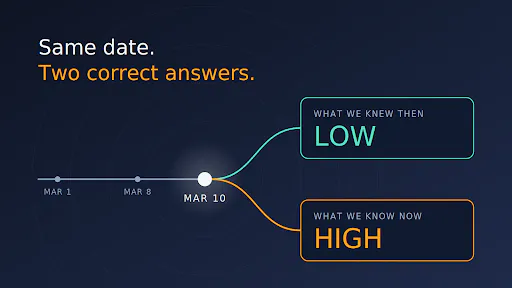
Financial data systems must maintain two timelines—business time (when a fact was effective) and system time (when it was recorded)—to correctly replay decisions after late corrections. A correction received on March 13 that revises a risk tier effective March 8 does not override the original system state known on March 10. Systems must preserve both the original belief and the corrected version, using non-overlapping date ranges to avoid ambiguity. This design prevents replay bugs but adds complexity in managing overlapping corrections and preserving historical beliefs without altering prior records.
Source: Your Database Can Time-Travel and Still Get the Past Wrong · HackerNoon · ML
Trading AI accuracy can be inflated by abstaining from volatile market transitions

A 2026 study found that high accuracy in volatility-regime classification models stemmed from abstaining during market transitions rather than improved forecasting. Models achieved 90–94% accuracy on selected predictions but had zero accuracy on actual regime shifts. The models consistently predicted calm conditions when volatility was rising, indicating they learned to avoid uncertain cases rather than identify predictive signals. This suggests accuracy metrics alone are insufficient; evaluation must examine which observations were excluded and whether errors cluster in high-risk scenarios.
Source: When a Trading AI Chooses Silence: Caution or an Illusion of Accuracy? · HackerNoon · ML
Hacker News debate questions whether AI expands or restricts scientific access

Hacker News commenters debate whether AI enables broader scientific access or reinforces proprietary control. One user argues AI has made scientific literature more accessible than ever, enabling deeper reading beyond abstracts. Others counter that compute barriers limit participation, and AI companies use open data without releasing training infrastructure or data. The discussion reveals no consensus: some see AI as democratizing research tools, while others view it as accelerating enclosure through proprietary training and restricted access to foundational resources.
Source: AI and the Enclosure of the Scientific Commons · Hacker News
What to watch next
The developments across containment protocols, decentralized compute, model performance, temporal data integrity, and scientific access reflect distinct but converging tensions in AI infrastructure: isolation versus openness, cost versus capability, speed versus reliability, and transparency versus control. Each advancement operates within defined technical boundaries, with no single solution resolving the broader trade-offs.
Continue reading