Language-Dependent Source Bias in AI Search Systems
AI search systems cited different sources by query language, favoring Lebanese sources more often for Arabic queries than English ones.

Published
October 24, 2026
Reading time
5 minutes
Perspective
Research
Topics
AI search bias · multilingual AI · AI memory reflection
A study by Mohamed Soufan tested four major AI search platforms—ChatGPT Search, Gemini, Perplexity, and Copilot—using 320 equivalent questions about Lebanon in English and Arabic. The findings revealed consistent disparities in source selection: Arabic responses cited Lebanese sources 56.7% of the time, compared to 31.6% in English responses. This 25.1-percentage-point gap was observed across all eight subject areas and all four platforms, though the magnitude varied, with Gemini showing the largest difference at 34.8 points. The study also noted that international organizations were cited more frequently in English (21%) than in Arabic (12%), while Lebanese news outlets like An-Nahar appeared prominently only in Arabic results.
Language-driven citation disparities across AI platforms
The study found that all four AI search systems increased the proportion of Lebanese sources in Arabic responses compared to English, with Gemini showing the largest gap (34.8 percentage points) and ChatGPT Search the smallest (18.5 points). This pattern held across all eight subject areas, indicating systemic language-based bias in source retrieval rather than isolated platform behavior. The variation between systems suggests that the underlying retrieval mechanisms differ in how they weight linguistic cues, though the study does not identify the technical cause. This implies that users may receive divergent information landscapes depending on language choice, even when asking identical questions.
Source: Your Language Changes Who AI Search Cites · HackerNoon · AI
AI memory systems evolving beyond storage to reflection
Hanul Lee describes a shift in AI agent memory architectures from passive filing cabinets to dynamic systems that retain, recall, and reflect. Unlike traditional note-taking, these systems recombine past experiences to generate new observations—such as inferring behavioral patterns from meeting notes and emails—without human input. This reflective process, inspired by Hindsight’s architecture, allows AI to reconstruct its understanding over time, mirroring human memory’s revisionary nature. The author notes this evolution becomes critical when deploying dozens of agents, as shared, self-organizing memory is required to maintain consistent internal models across agents.
Source: A Second Brain Is Not a Memory Store · HackerNoon · AI
MIT leadership emphasizes human insight amid AI expansion
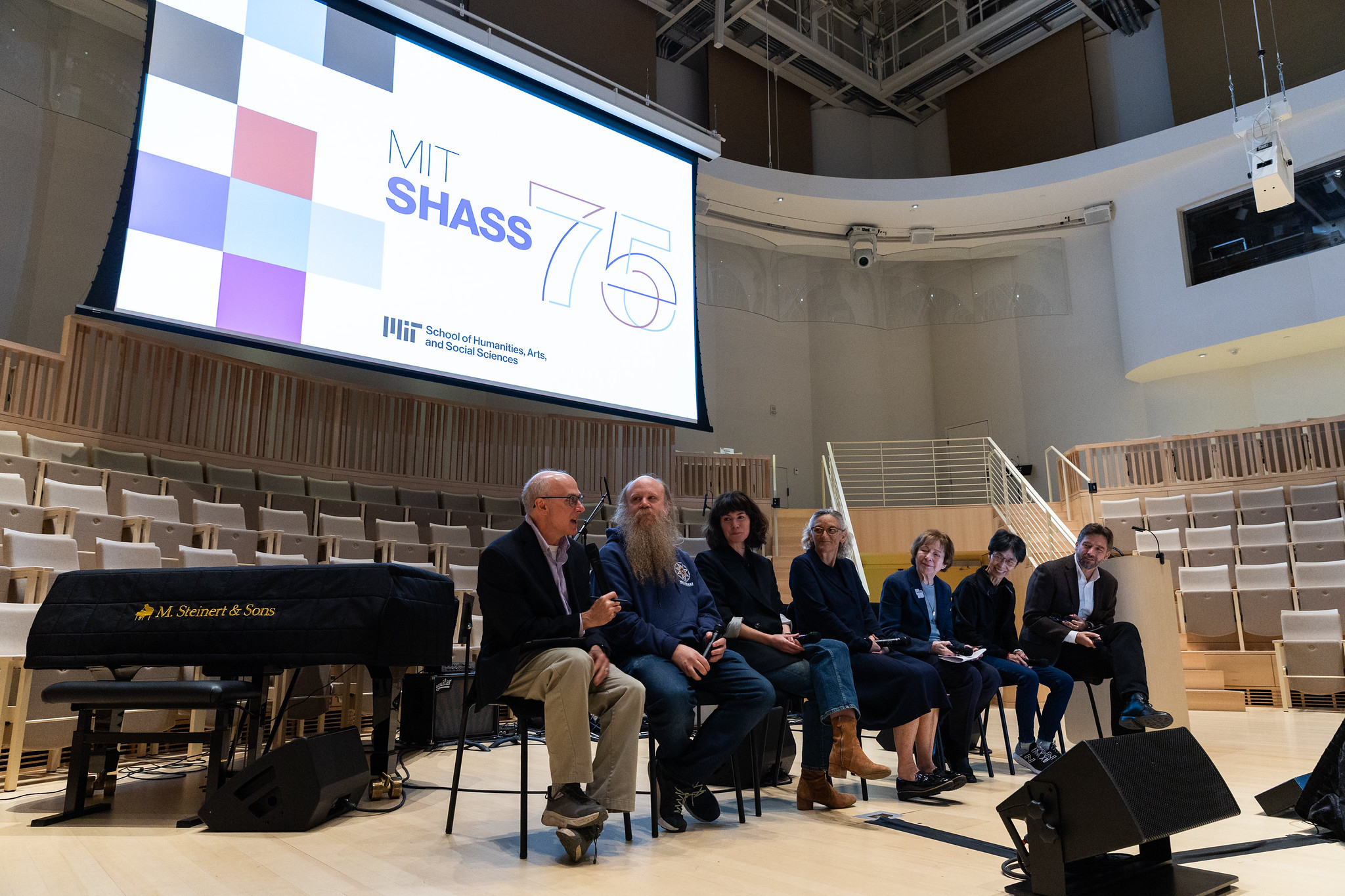
At the SHASS 75th Anniversary Symposium, MIT President Sally Kornbluth stated that the Institute has never needed the humanities’ insight and guidance more than now, citing AI’s broad societal implications. Dean Agustín Rayo reinforced that SHASS research should not be judged solely by practical application but also by its role in exploring questions of meaning, justice, and cultural identity. Provost Anantha Chandrakasan highlighted the MIT Human Insight Collaborative as a strategic initiative to ensure technology development remains human-centered. These remarks reflect institutional recognition that technical mastery alone is insufficient for addressing complex societal challenges.
Source: Reinforcing the value of human understanding at MIT · MIT News · AI
OpenAI partners with Poland’s NASK on AI safety research
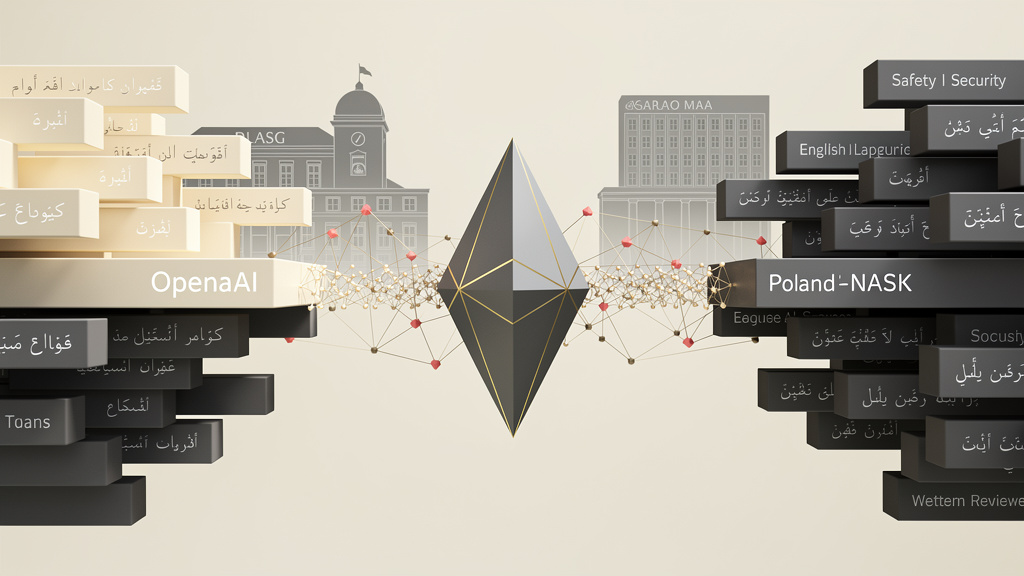
OpenAI and Poland’s National Research Institute (NASK) have entered a partnership focused on AI safety, security, and technical research to strengthen safeguards and support a more resilient digital ecosystem. The announcement, issued directly by OpenAI, confirms collaborative research efforts but provides no further details on scope, timelines, or specific objectives. This marks a formal alignment between a leading AI developer and a national cybersecurity research body, suggesting growing international coordination in AI risk mitigation.
Source: OpenAI and Poland’s NASK partner to advance AI safety and security · OpenAI News
Martha Minow warns AI threatens Enlightenment values in democracy

Harvard legal scholar Martha Minow, in her Compton Lecture at MIT, expressed concern that AI is eroding core Enlightenment principles—reason, evidence-based discourse, and civic participation—by promoting passivity and undermining critical thinking. She identified AI’s role in weakening education, information reliability, and public discourse, particularly through interfaces that replace deep engagement with sycophantic responses. Minow urged MIT researchers to develop AI tools that act as tutors, nudging users toward reflection rather than replacing cognitive effort. She emphasized that technology could reinforce democracy if intentionally designed to enhance, not supplant, human reasoning.
Source: At MIT, Martha Minow speaks on sustaining democracy, both by using and overcoming AI · MIT News · AI
Practitioners identify AI language as dense and metaphorically incoherent

On Hacker News, users attribute the difficulty in understanding AI-generated language to its lack of grounding in human physical reality and tortured metaphors. One commenter noted that training penalizes clearly wrong text more than ambiguous text, incentivizing convoluted phrasing. Others observed that AI favors low-frequency n-grams and verbose filler, producing text that is grammatically correct but semantically opaque. While some users claim to understand AI text better than human writing, others report needing to slow down significantly to parse it, suggesting a mismatch between fluency and cognitive accessibility.
Source: Why is AI generated language so hard to understand? · Hacker News
What to watch next
These developments reveal that AI systems are not neutral conduits of information: their outputs are shaped by linguistic context, memory architecture, institutional values, and training incentives. Source bias in search, reflective memory in agents, and the erosion of Enlightenment norms in public discourse all point to deeper structural influences embedded in AI design. The partnership between OpenAI and NASK signals growing institutional recognition of these risks, while practitioner feedback underscores the need for more human-aligned language generation.
Continue reading