Verifiable AI: Hardware Attestation Enables Large Model Trust Today
Trusted execution environments (TEEs) are currently the only practical method for verifying large language model inference without sacrificing performance.

Published
October 27, 2026
Reading time
5 minutes
Perspective
Research
Topics
AI verification · hardware attestation · feature selection
A Berkeley study reveals that cloud AI providers can substitute models without detection, as statistical analysis fails to distinguish between full-precision and quantized outputs with reliability. This undermines trust in API responses where model identity is merely a string field. Three approaches to verification exist: zkML, opML, and hardware attestation. zkML offers mathematical proof but is prohibitively slow for large models, with proof generation taking hours for models orders of magnitude smaller than production systems. opML relies on economic incentives and requires public model weights, making it unsuitable for proprietary systems. Only hardware attestation via TEEs delivers immediate finality, preserves privacy, and scales to large models like Llama-3-8B with minimal overhead.
TEEs enable scalable verification for large models
Hardware attestation using trusted execution environments (TEEs) is the only method currently practical for verifying large language model inference. On a Llama-3-8B model, TEEs introduced only a 3–16% throughput reduction and 9–16% latency increase, according to Berkeley measurements. This contrasts sharply with zkML, which requires hours per inference for models a thousand times smaller than production systems. TEEs generate signed reports confirming the model hash loaded in the enclave, allowing users to verify execution integrity without exposing weights. The method’s viability hinges on trusting the hardware vendor and the absence of exploitable side-channel flaws, which remain a documented risk in prior enclave implementations.
Source: Verifiable AI: Proving What Happened Behind the Black Box · HackerNoon · AI
Correlation filters discard nonlinear predictive signals
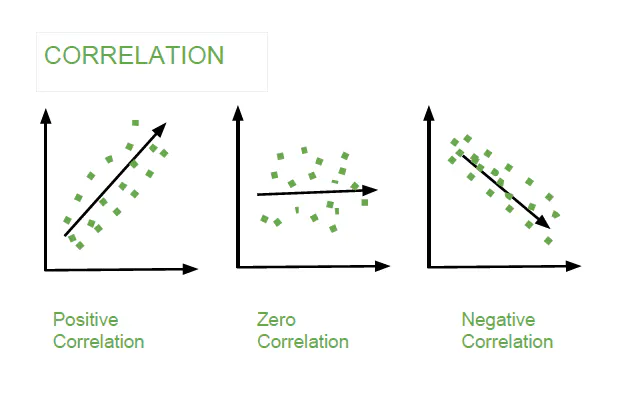
A Python experiment demonstrated that filtering features by Pearson correlation removed all nonlinear and interaction signals, reducing a random forest model’s R² from 0.846 to 0.006. The dataset included a U-shaped relationship (y = x² + noise) and an XOR interaction, both of which scored near zero correlation despite being perfectly predictive. The filter retained only linear features and their duplicates, discarding genuinely informative variables with low marginal correlation. This shows that correlation-based selection is structurally inadequate for capturing real-world data patterns, particularly in domains like fraud detection or energy demand where nonlinearities dominate.
Source: Correlation Is Not Enough: Selecting Features Without Throwing Away Predictive Information · HackerNoon · ML
Daybreak accelerates vulnerability research at Check Point

Check Point uses OpenAI Daybreak to speed up the research process behind new security protections, enabling analysts to convert vulnerability intelligence into customer defenses more rapidly. The tool is applied within the context of security research workflows, reducing the time required to analyze and respond to emerging threats. No details are provided about the nature of the AI’s contributions, the types of vulnerabilities targeted, or the specific metrics of acceleration. The implementation remains confined to Check Point’s internal research pipeline and is not described as a public-facing product.
Source: How Check Point accelerates vulnerability research with Daybreak · OpenAI News
Cognitive debt emerges as a core SDLC challenge in AI adoption
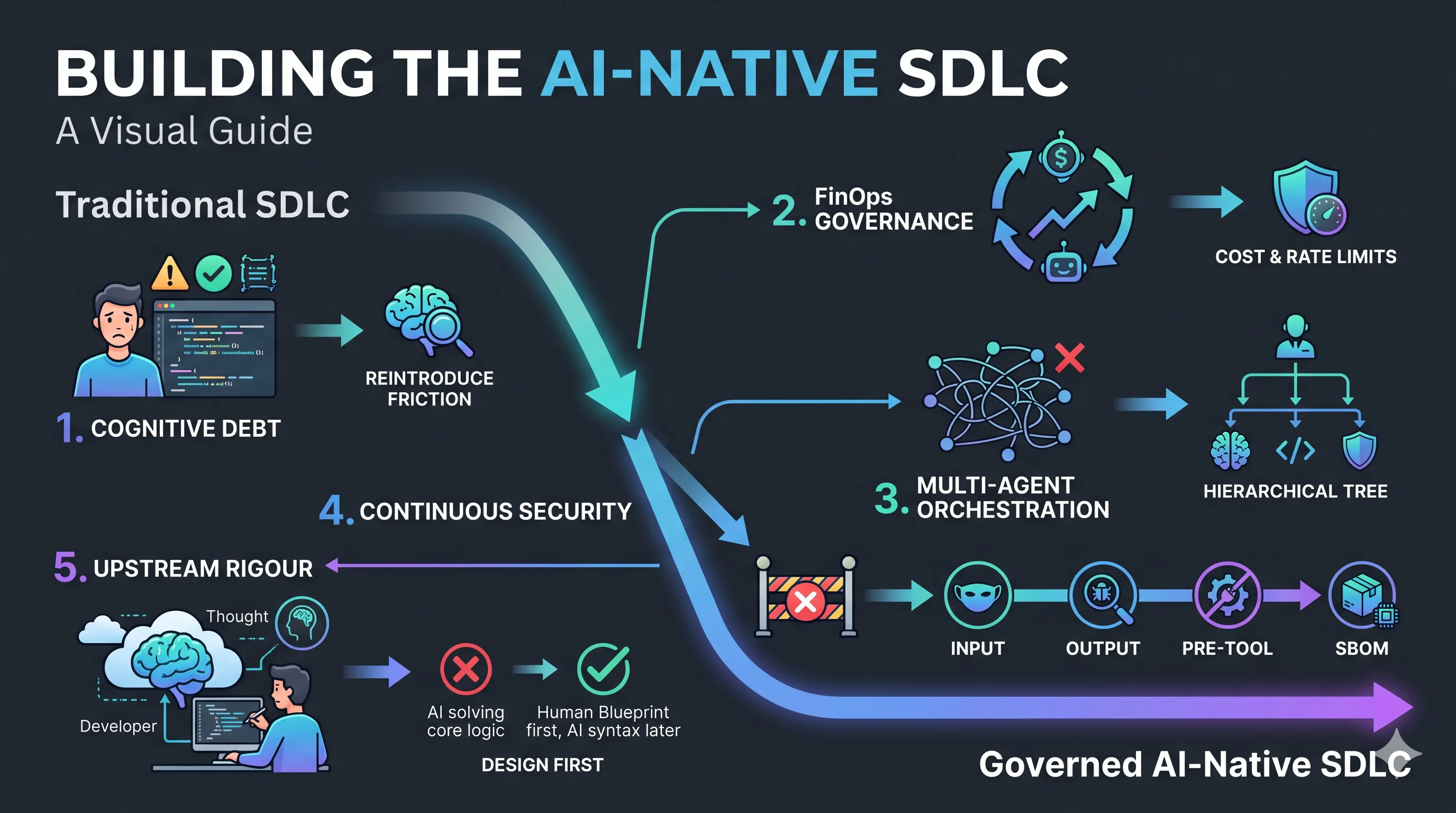
Enterprises adopting AI in their software development lifecycle face cognitive debt—where developers lose the ability to trace and debug AI-generated code due to volume and opacity. Teams report that AI-generated code compiles and passes tests, but developers cannot explain its logic, creating fragile expertise. To counter this, organizations now enforce manual tracing of AI output in PR reviews and require explicit documentation of architectural intent before merging. This shift replaces traditional metrics like code volume with deep comprehension as the primary quality gate, fundamentally altering engineering culture and review practices.
Source: Architecting AI-SDLC: Five Lessons For DevSecFinOps Teams · HackerNoon · AI
MIT addresses data center sustainability at Climate Week
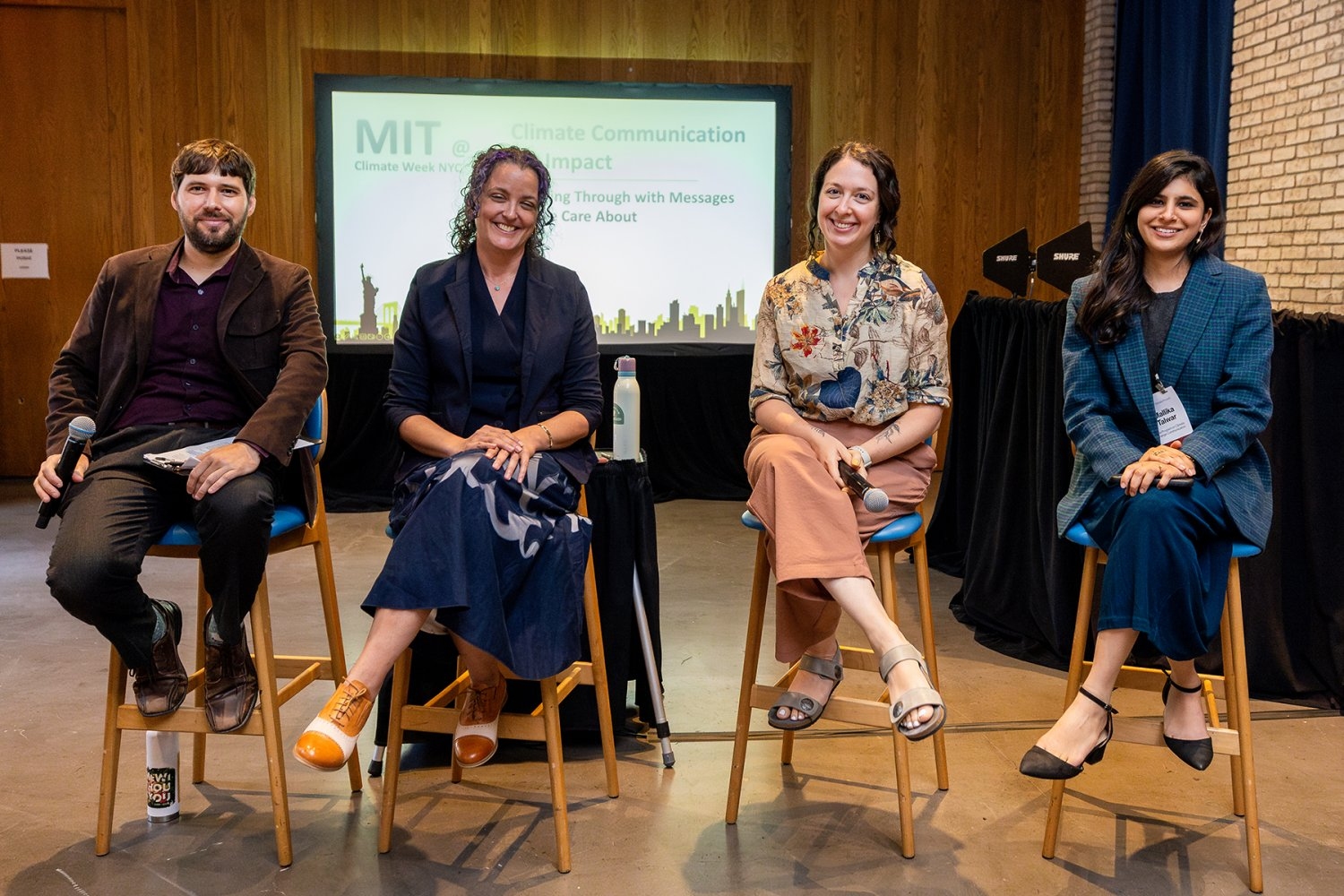
MIT convened a panel at Climate Week NYC focused on reducing energy consumption in data centers and transforming them into community assets. Speakers included faculty from MIT’s Department of Electrical Engineering and industry partners, discussing technologies to make data centers more sustainable. The session emphasized that technical solutions alone cannot resolve the interconnected constraints of energy use, economic viability, and community impact. No specific technologies, energy reduction targets, or deployment timelines were disclosed, and the discussion remained focused on the need for cross-sector dialogue rather than presenting implemented solutions.
Source: At New York Climate Week 2026, MIT connects with a global network · MIT News · AI
OpenAI shares model results on mathematical conjectures

OpenAI published results from its models on the Kakeya conjecture, Exponential Time Hypothesis, and quantum chromodynamics, enabling researchers to verify and build upon them. The announcement does not specify the nature of the results, whether they constitute proofs, counterexamples, or heuristic insights, nor does it detail the model architecture or training methodology used. The sharing is framed as an invitation for academic collaboration, with no claims about correctness, novelty, or reproducibility beyond the availability of the outputs for independent examination.
Source: Working with academic communities to build scientific understanding · OpenAI News
What to watch next
The convergence of verifiable AI, feature selection rigor, and AI-integrated development reveals that trust in machine learning systems now depends less on model size and more on governance structures. Hardware attestation enables scalable verification, while cognitive debt and flawed feature selection expose hidden risks in adoption. OpenAI’s academic disclosures and Check Point’s use of Daybreak reflect a broader trend: AI’s value is increasingly tied to transparency mechanisms and integration into existing professional workflows, not just performance gains.
Continue reading