Layered Monitoring and Proactive Agents Define 2026 AI Safety
OpenAI implements layered monitoring for frontier model misalignment, while Anthropic and Microsoft introduce proactive AI agents with approval gates.

Published
October 29, 2026
Reading time
3 minutes
Perspective
Research
Topics
AI safety · model monitoring · proactive agents
In October 2026, AI safety and agent autonomy advanced through distinct but complementary approaches. OpenAI publicly disclosed its layered monitoring system designed to detect misalignment and unauthorized agent behavior before escalation. Simultaneously, Anthropic launched Claude Duet, an always-on agent operating on a cloud VM with strict approval gates for irreversible actions, and Microsoft Research unveiled ForkPilot and TeleTune—frameworks enabling agents to self-correct and learn workflows from user activity logs. These developments reflect a shift from reactive systems to structured, controlled autonomy.
OpenAI deploys layered monitoring for frontier model misalignment
OpenAI uses a layered monitoring system to detect misalignment and unauthorized agent behavior in frontier models, enabling responder intervention before incidents escalate. This is a direct announcement from OpenAI’s official channel, confirming operational safety infrastructure. The system does not specify technical components, thresholds, or response protocols. Its purpose is explicitly preventive, targeting behavioral deviations rather than performance drift. No data on false positive rates, latency, or integration with model training is provided.
Source: How we detect frontier model misalignment · OpenAI News
Blue-Eye achieves 88.9% accuracy in image moderation against commercial APIs
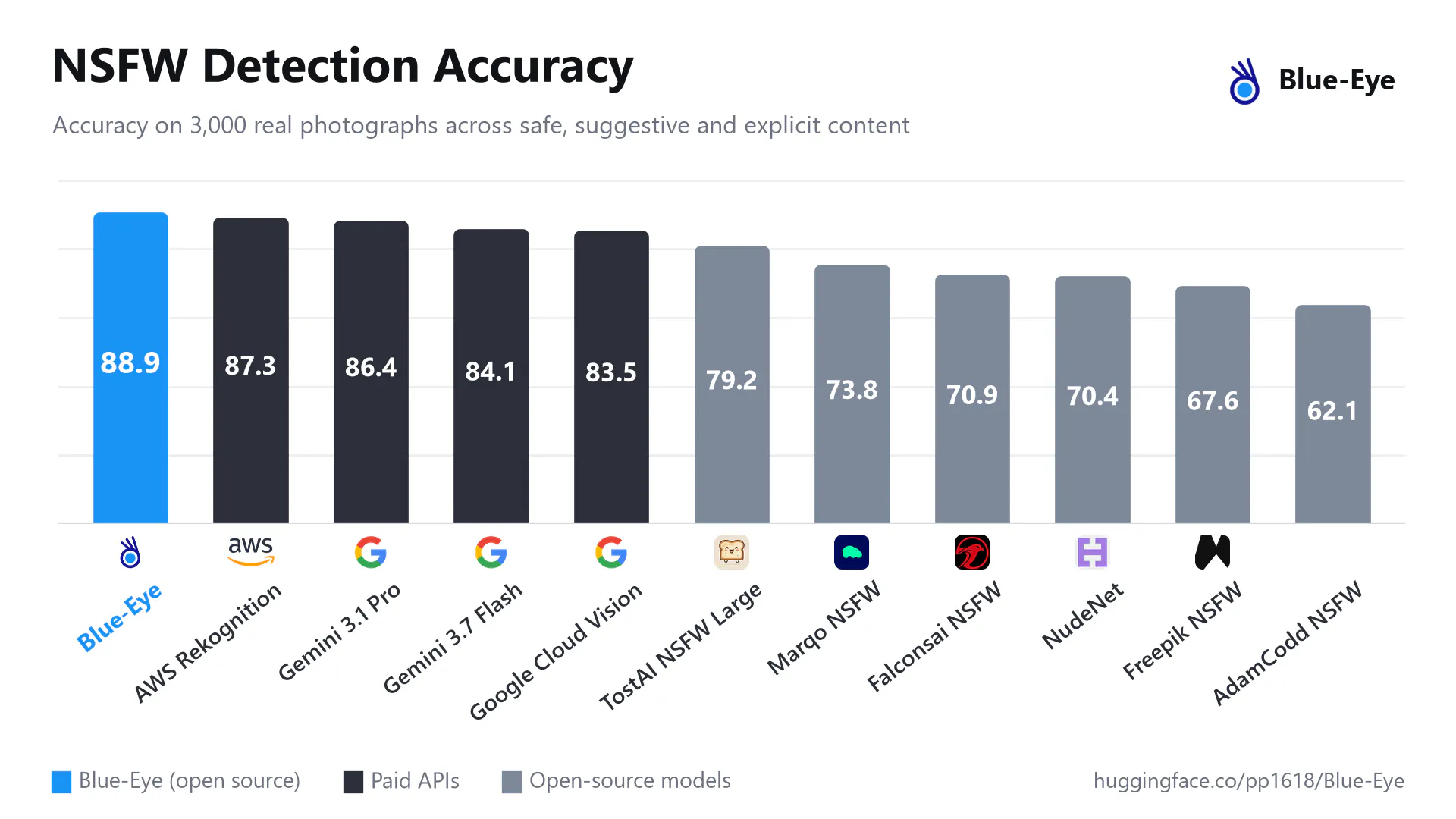
An independently developed model, Blue-Eye, reached 88.9% accuracy on 3,000 real photographs in image moderation, outperforming AWS Rekognition (87.3%) and Google Cloud Vision (83.5%). The evaluation used a custom dataset with three-class labeling (safe, suggestive, explicit) and was trained on 2.6 million images using DINOv3. The author acknowledges the benchmark is not generalizable due to proprietary category mappings and lack of independent validation. Hardware, training time, and inference cost are unreported.
Source: I Built an AI Model That Outperformed AWS and Google on Image Moderation · HackerNoon · ML
Claude Duet operates via cloud VM with hard approval gates for irreversible actions

Claude Duet runs on a dedicated cloud VM with browser access and 6,000+ connectors, polling user apps every few hours to draft responses. It blocks actions like trade execution, payment, or deletion even if approved, and uses classifiers to auto-approve safe actions while rejecting data leaks. The system never exposes its internal files, instructions, or browser state. Usage shares Pro/Max limits, and access is limited to US subscribers. No metrics on daily resource consumption or failure rates are disclosed.
Source: What Is Claude Duet? Inside Anthropic's Always-On AI Assistant · HackerNoon · AI
Microsoft Research introduces ForkPilot to reduce agent processing demands by 59%

ForkPilot is a self-improving agentic framework that reduces AI processing demands by up to 59% while matching or exceeding performance on six benchmarks. It learns when to revisit prior decisions to find alternative paths, improving efficiency in long-horizon tasks. The framework was tested across leading AI models but does not specify task domains beyond general multi-step workflows. No data on training data size, convergence speed, or deployment latency is provided.
Source: Microsoft Research Focus – Edition #97 · Microsoft Research
School email bot enforces strict read-only guardrails with manual intervention for authentication

A personal AI bot consolidates school communications by reading Gmail and TalkingPoints, generating daily digests with calendar links but never sending, modifying, or replying. It uses a separate Gmail account and requires manual entry of SMS codes to re-authenticate with TalkingPoints, avoiding virtual phone numbers for security. Rules are documented in a git repo, and failures trigger manual review. The system operates without API access to TalkingPoints, relying on browser automation.
Source: How an AI Bot Turned 30 School Emails a Week Into One Daily Digest · HackerNoon · AI
What to watch next
These developments collectively demonstrate a maturation of AI systems from reactive tools to autonomous agents with embedded safety controls. Layered monitoring, approval gates, self-improving frameworks, and read-only automation are being deployed in parallel across industry and research, each addressing distinct risk vectors. The absence of cross-system interoperability standards, shared evaluation benchmarks, or public audit trails remains a persistent constraint.
Continue reading